I bought Streets Blue Ribbon 2Lt Choc Mint Icecream because the images on the container showed about 50% choc and 50% mint flavoured icecream. However upon opening the product (and almost cutting my finder on the tamper proof breakoff tab) I was surpised, disappointed and annoyed to see about 95% choc and 5% mint. Even after I have consumed about half of the product, the ratio is about the same. There is only a thin trace of green coloured mint flavoured icecream, about 1 cm or less wide. Is there a government department in QLD that handles complaints about misleading images on product packaging?
I can understand your frustration.
The ingredient list is not helpful, perhaps another topic, yet typical of such disclosures.
Ingredients: Dairy ingredients [reconstituted buttermilk (milk) and/or reconstituted skim milk, cream (milk), milk solids], glucose syrup, sugar. vegetable oil, cocoa powder^ (1%), emulsifier (mono and diglycerides of fatty acids), stabilisers (guar gum,tara gum, locust bean gum, carrageenan), colours (copper chlorophyllin, annatto), flavours. Contains: milk May contain: wheat, gluten, egg, soy, peanut, tree nuts.
A reasonable consumer might expect an image to be reasonably similar to the product, but to your question
In short, no. Product images are essentially allowed as puffery to attract buyers, not necessarily to accurately reflect contents even if it should not be that way.
Consider the images from Maccas, Hungry Jacks, and F&C shops where the delivered product and the images used for promotion and on packaging are, to be kind, not alike. Also reference the old topic ‘pack shots’ as a further example.
Your best avenue is to complain directly to Streets, and since not satisfied you could seek a refund from Streets or the shop, whether or not legally entitled. Should you complain to Streets (a Unilever brand) directly you might note to them you are ‘not happy’ citing their Happiness Manifesto.
7 Likes
Is this the image you are referring to?
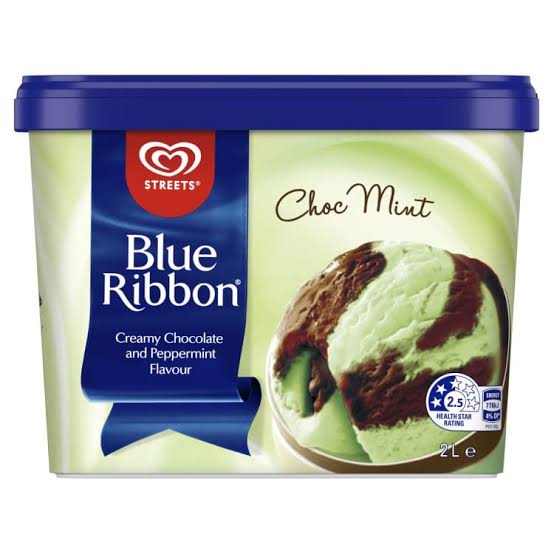
While the image shows both chocolate and mint flavoured ice cream, the image is what is called ‘for illustration purposes’ or to provide a example of how it is served. It isn’t a guide on what percentage/split of the chocolate and mint flavoured ice cream in the container.
The product labelling also doesn’t indicate the percentage/split of chocolate nor mint ice cream.
They won’t be interested for the reasons outlined above.
If the labelling stated a percentage/split of chocolate and mint flavoured ice cream, you may have grounds to take further.
I would be taking action with your wallet, that being not to buy it again if you find the ratio of chocolate and mint flavoured ice cream unsatisfactory.
It is worth noting some consumers may prefer higher percentage of chocolate over mint flavoured ice cream, and could be why the split isn’t 50/50. Streets would use such information when manufacturing the ice cream.
Choice has also allowed consumers to post where:
It is common practice for images which are on packaging‘for illustration purposes’. If you have photos of the container contents, you are more than welcome to post them in the linked thread.
3 Likes
Noting the wisdom of the prior two replies, the pack shot certainly gives an impression of the contents having a substantial mint ice cream component. To one eye it looks to be more mint with shavings of chocolate across the tops.
While an expensive exercise to test - is an alternate assessment the actual contents mix varies randomly due to a lack of control when the product is manufactured? Although not humour if you are the purchaser - would Seinfeld have suggested there is someone somewhere wondering about their container of Streets Choc Mint - 5% choc and 95% mint?
We have in the past noted wide variations in what might be in a Neapolitan ice cream mix. Streets and others.
3 Likes
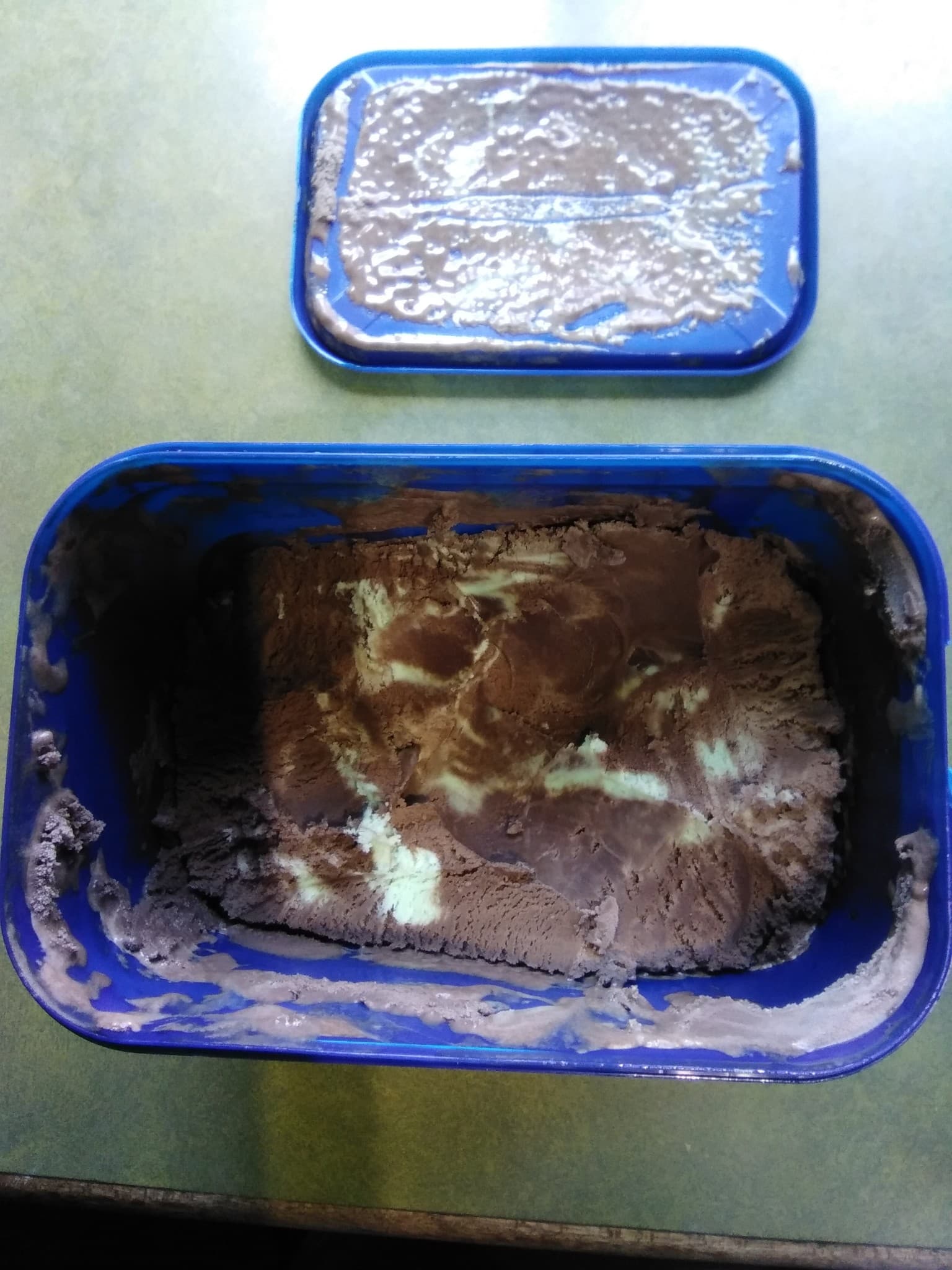
1 Like
I would certainly suggest you are well within your rights to be unhappy about the image depiction versus the product reality. But as others have pointed out, there is no legal recourse for this.
I once wrote a letter of complaint to Aldi when the picture on the package was such a far cry from what the packaging actually contained… They wrote back to me and were not interested in my viewpoint.
It’s a very common issue and personally I label it deception. Technically it might be called “puffery” but it’s really a deliberate marketing deception and I have to ask why it is not classified as false or misleading advertising, because that’s exactly what it is. Never mind the fine print at the bottom of the box saying “serving suggestion”.
When you buy a new car, you reasonably expect the car to look like the pictures in the glossy advertising pamphlets.
But it seems that food is exempt from such a rule.
BB
1 Like
Why bother? Streets Blue Ribbon is NOT Ice cream, it does not have enough cream in it. It is ICE Confection. It is far from a good product these days, look for products that have Ice Cream on there packing, Blue Ribbon does not.
1 Like
I agree it isn’t probably isn’t what can legally be termed “Ice Cream”.
Though it doesn’t have to be all cream but it must contain
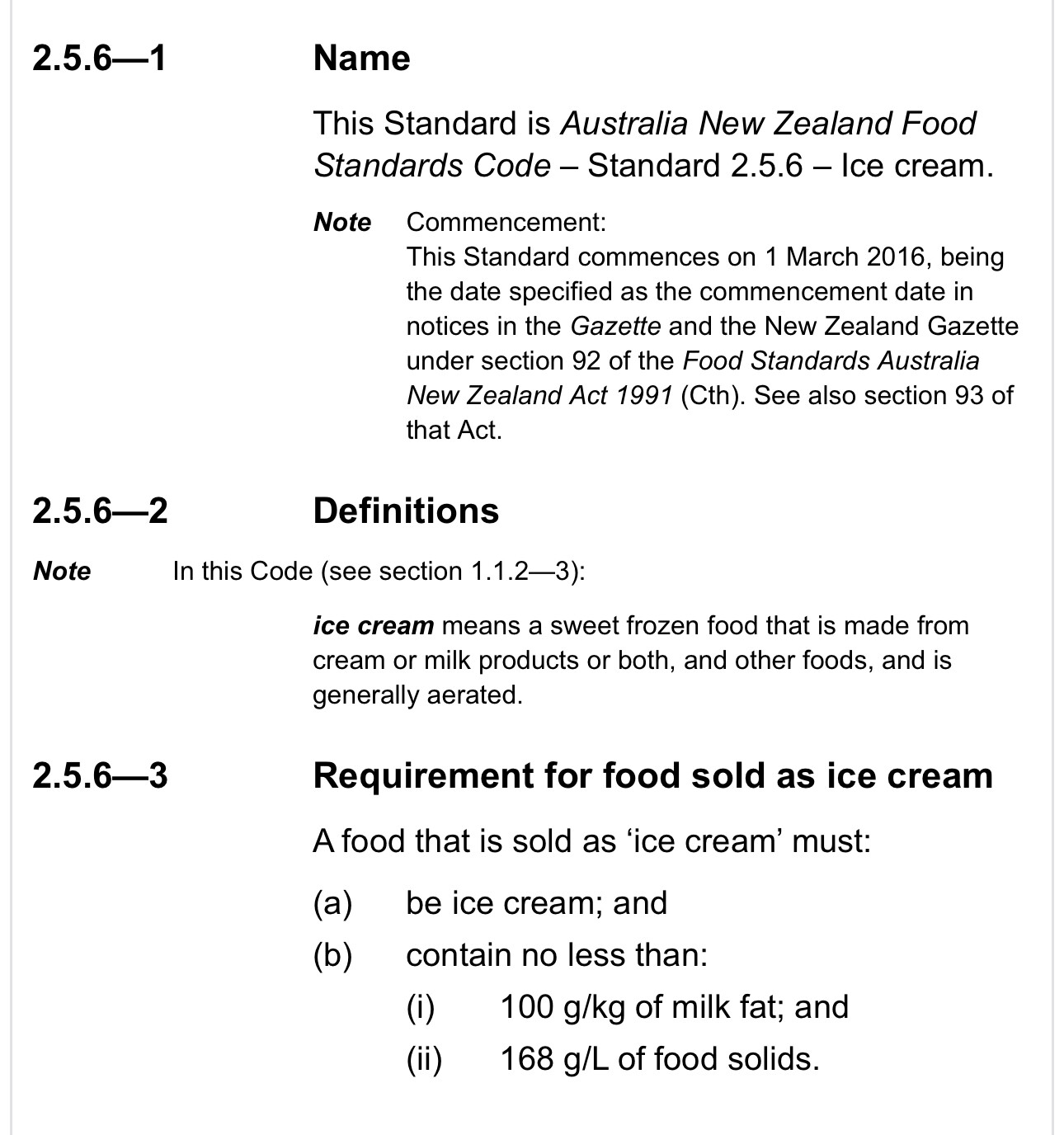
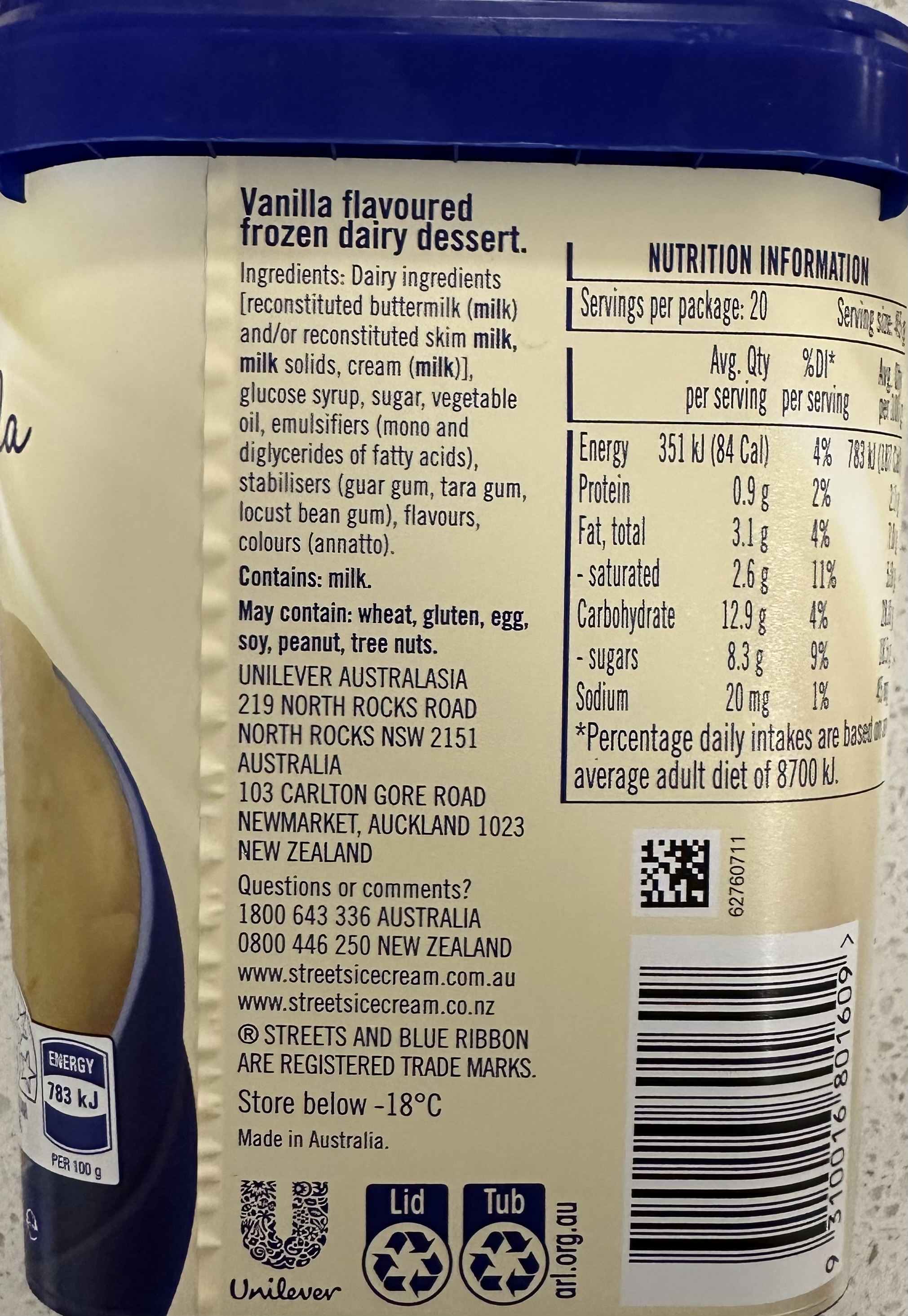
The Streets Blue Ribbon Vanilla one doesn’t even describe anywhere on the container that it is Ice Cream, it is referred to as either simply Streets Blue Ribbon Vanilla or as a frozen dairy dessert.
2 Likes
Quite right, it does not qualify as Ice Cream. As for the label it conforms to the FSANZ standard, the product is “Streets Blue Ribbon Classic Vanilla”, there is no deception as it does not claim to be Ice Cream.
I don’t know about the choc mint variety but for the vanilla many tasters actually like it, SBR scores very well in Choice taste tests against many contenders that are “real” ice cream that are several times the price. If you don’t like it that is your choice but for many the label “Ice Cream” is not required for enjoyment. De gustibus non est disputandum.
I buy what I like that is a reasonable price and forget the label, YMMV.
2 Likes
Don’t have any idea what you people are raving on about. 
Choice considers Streets Blue Ribbon to be icecream. And many other brands.
So do I.
According to FSANZ standard 2.5.6 it does not contain sufficient milk fat to be called ice cream. Whether this matters to taste or enjoyment is subjective.
1 Like
Hi fellow ice cream lovers. If you look at those ingredients you will see that your supermarket “ice cream” in not ice cream at all. It falls into the ultra processed foods category. The fail-safe test is if the ingredient isn’t in your kitchen cupboard, it’s probably an ultra processed food. A great book to read on these “foods”, including a long discussion on “ice cream”, is Dr Chris Van Tulleken’s book “Ultra Processed People”
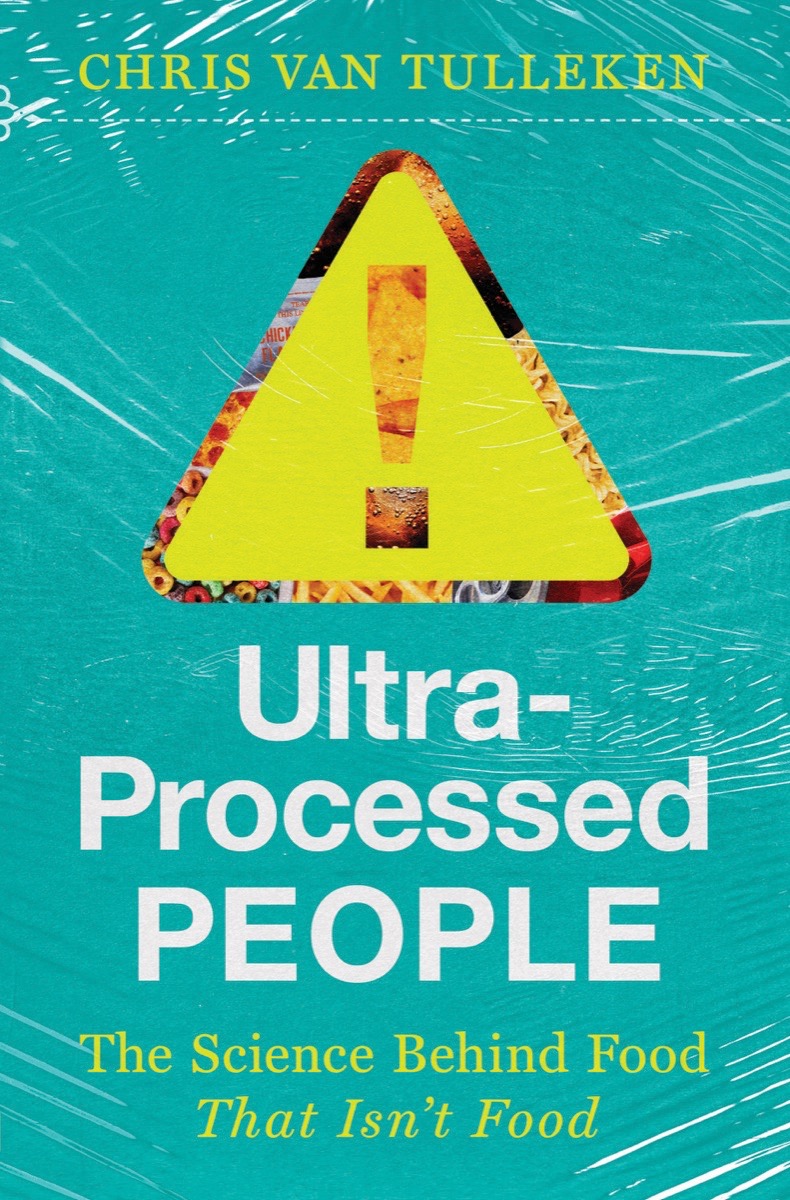
After listening to the ice cream chapter I am now going to buy myself an ice cream maker.
2 Likes
An interesting analogy. We are what we eat is often said.
FSANZ (Food Standards Australia and New Zealand) is the go to for Australia’s food producers and consumers. Processed foods are classified including the use of NOVA. The following link is to FSANZ advice on what is classified as processed and ultra-processed food. There is no reference to what one might find in the kitchen cupboard (aka pantry) as a reliable alternative. Suspicions are most pantries these days include quantities of processed and ultra-processed products - hence a sure fail if relied upon.
Diet quality and processed foods | Food Standards Australia New Zealand.
FSANZ does mention ice cream and the relevant category. The health start ratings is another useful guide to which products one needs to better manage in a healthy diet.
Apologies but my budget does not extend to purchasing the book.
P.S.
For those wondering about whether their pantry includes any ingredients which have been processed or ultra-processed plenty of scope. EG Canned coconut milk. In addition to the extraction process used and depending on brand one will find added emulsifiers and stabilisers. (EG 435, 466) Pandaroo. Other brands YMMV?
1 Like
I don’t see that at all. What I see is a discretionary food with quite a bit of fat and sugar that should be consumed occasionally as a treat. Putting an arbitrary label on it does not help.
That doesn’t tell us how or why such ingredients might do us harm. Look at some of the ingredients in SBR vanilla:
-
Milk products; buttermilk and skim milk, I don’t have them so they must be bad but many people eat them daily
-
Gelatine, I have it so its OK, but it is processed for hours
-
Colour 160b (annatto seed extract) I have the seeds and could produce the extract if required in 5 minutes
-
Emulsifier 471, I don’t have but I do have xanthan gum which most people do not, guess what I use it for? Improving the texture of my ice cream.
-
Flavour. This is not specified but since the product is described as “vanilla” it pretty well has to include vanillin. This is synthesised in large quantities and also found naturally in the vanilla bean. Many people have it in the cupboard in the form of vanilla extract. Few can distinguish the natural product from the synthetic.
This criterion is all over the place for this commercial “Ice cream”.
Undefined categories that sound scary are not going to help us have a good diet.
2 Likes
If you are interested in the book try your local library, that’s where I get most of the books I read. I also listen to podcasts such as Zoe as per my message to Syncretic. It’s led by Professor Tim Spector. Here’s a link to the one with Dr Chris Van Tulleken talking about ultra processed foods.

1 Like
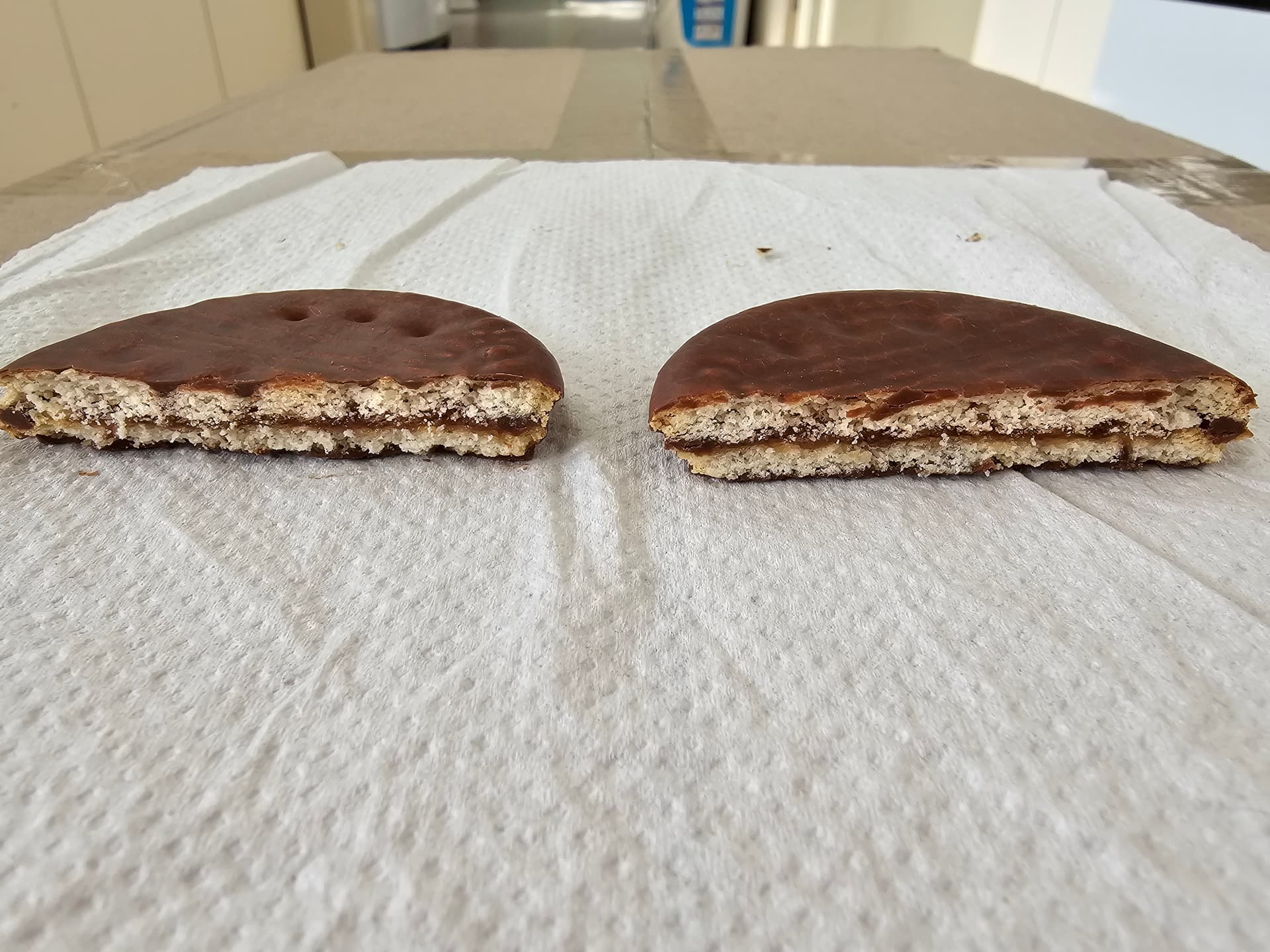
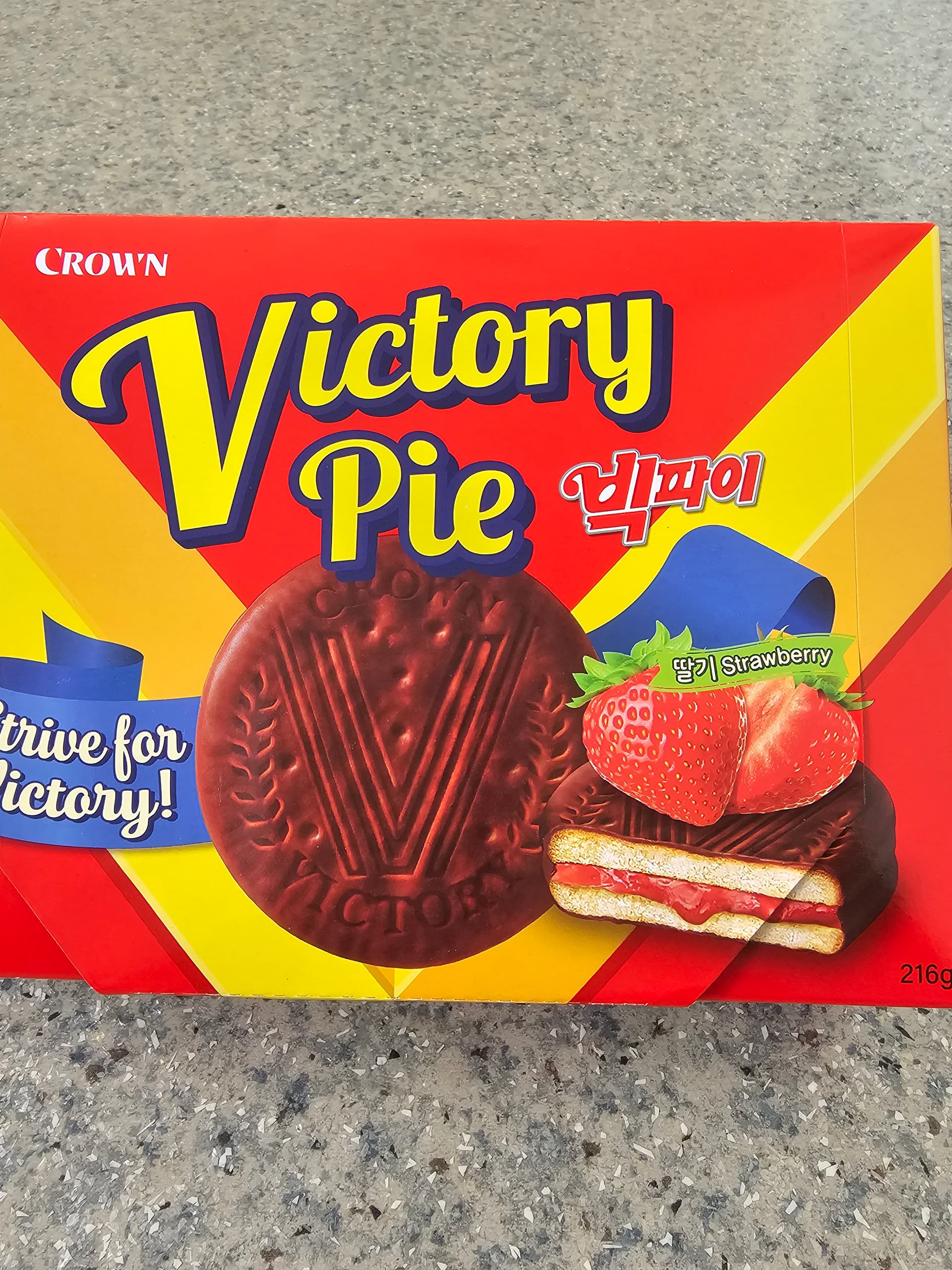
I bought these biscuits the other day. As the advertising industry gurus tell us, the goal of advertising is to get us to “feel” or “imagine” something or lead us into believing something that is not specifically stated or claimed in the advertisement.
The picture on this biscuit pack seems designed to get you to imagine “what a yummy looking biscuit, I’ll buy that packet”.
But the sad reality of what is actually inside the packet is a far stretch from the cover picture. We have all seen countless examples of this so called “puffery”.
I fail to understand why this is not considered false and misleading advertising, because clearly, the picture is designed to entice us to buy a product / fast food meal / etc which is not really a close match to the picture at all. I wonder if a law came into being that forced advertising images to be a reasonable replica of the product being advertised, what would happen to our fast food chains, and countless other products that practice this “puffery” ? Why are we mincing words with the term “puffery” when a better label would be false advertising.
BB
1 Like
An illustration compared to the photo on opening.
Maybe when the biscuits were made, they looked a bit more like that at the factory. But, agree, the biscuits looks somewhat different.
Maybe most consumers wouldn’t try to replicate what is on the label to see if they can actually match what is presented.
1 Like
You have been defrauded of a V, you have an ictory pie.
1 Like
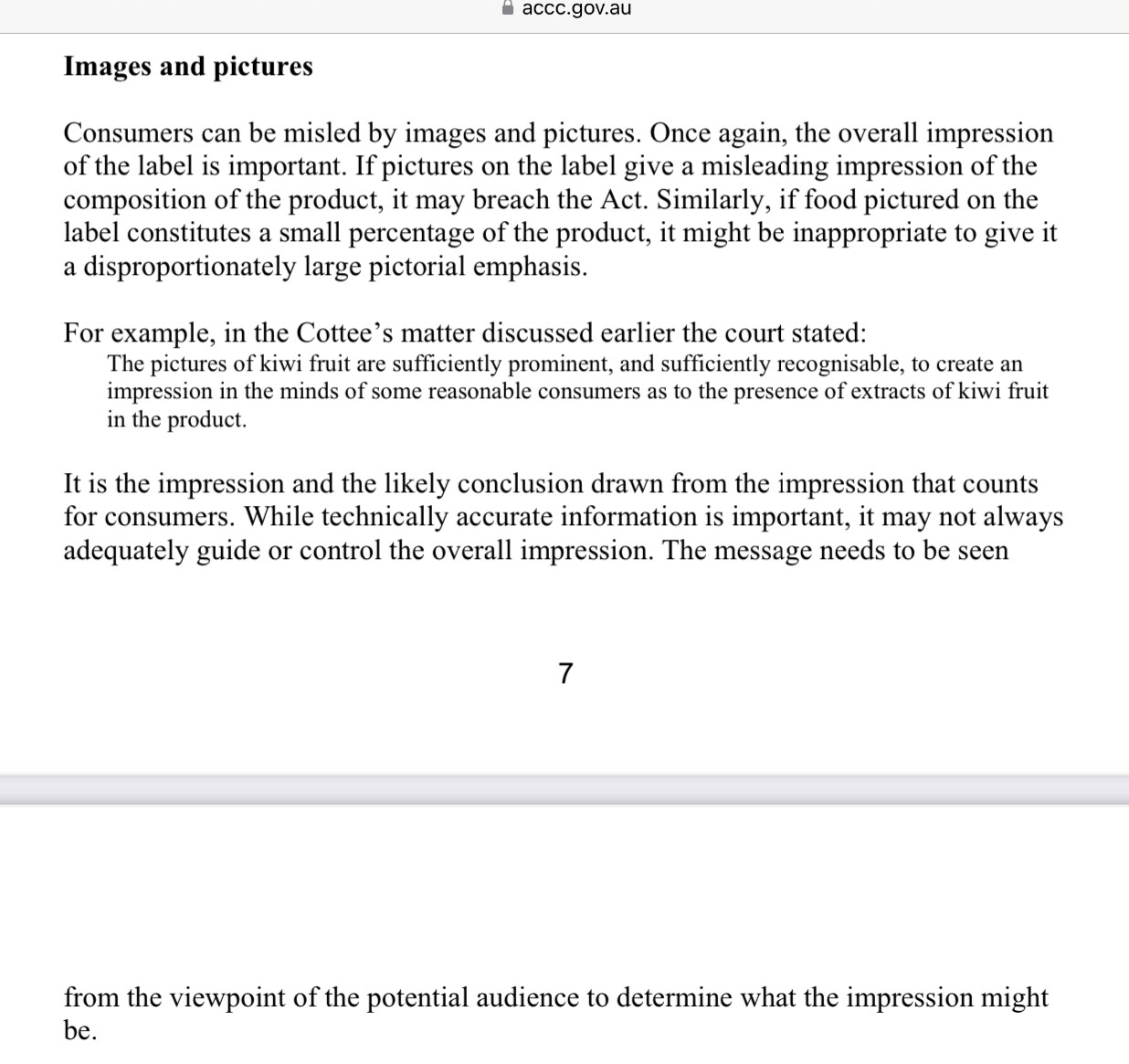
The “horses head” so to say has offered the following in the past. Misleading can apply to images and pictures. Puffery according to the Commissioner presenting at the time was only referred to as use of written descriptions.
https://www.accc.gov.au/system/files/Misleading%20Claims%20and%20the%20Trade%20Practices%20Act.pdf
1 Like
