Apple laptop repair under ACL

Hi There, Experts,

So, my daughter purchased a new Apple Macbook Air, direct from Apple ($1500). Three and a half years later it has died; it needs a ~$850 repair, or replacement.

We put the view to Apple that under Australian Consumer Law a reasonable consumer would take into account that this was not a cheap laptop, that Apple had made several representations at the time of purchase that the machine was “durable”, and that Apple is a reputable company. On that basis, a reasonable consumer would not expect a major failure at three and a half years. A degradation in performance would be expected, but not complete death.

The laptop has had little use and is otherwise in good condition.

We asked Apple to consider this and to see if we could come to the party in some way (replacement, discounted repair, etc).

Apple said no. They apparently have an Australian Consumer Law team who considered the case and said “no”, and the guys who you speak to on the phone just refer to that decision and say that no further discussion is possible. Their ACL team says anything over three years is not covered by the ACL.

The ACL, IMHO, depends on an interpretation of “reasonable” and, in general, cut-and-dried solutions are not appropriate. By its nature, these require some discussion.

I’m not happy with the decision or the process applied by Apple. Their use of a dedicated ACL team, that you cannot communicate with directly or challenge, seems to be a tactic aimed at shutting down consumers.

We will lodge a complaint with NSW Fair Trading shortly.

What is the view, Dear Experts, is this a matter for some consideration under the ACL or am I just a cranky old man (i.e. an unreasonable consumer)?
3 Likes

Welcome to the Community @PeteReid.
Your question is one which comes up often. Choice’s consumer team has provided the following guidance on the expected life spans of common categories and types of consumer products.

Guidance includes laptops.

Apple products are generally considered well made, and over time have become more cost competitive. Apple product support is know for premium costs. Taking your issue to Fair Trading is an option. Although for a 3.5 year old laptop getting a resolution or direct response may take some time. Possibly more inconvenient in how long it takes to get a clear response (or not clear) than making an alternate decision. To be without use of the laptop for that length of time may not be acceptable?

There are third party repairers who you might consider, knowing what Apple consider is necessary. Others in the Community may offer some advice on who to look to if not Apple. To assist others to respond you may find it useful to describe the fault or repair required and your general location (EG City or Region of Australia).

2 Likes

@PeteReid, welcome to the community

Further to what @mark_m has indicated, do you know what has failed? Not every part of a laptop has the same lifespan, some components should last a very long time, while others less time. For example, a battery which has multiple daily discharges and recharges, may has a relatively short life and can therefore fail. This is often why batteries have shorter manufacturer warranties than the rest of a device.

Apple has a poor reputation in relation to honouring consumer guarantees under the Australian Consumer Law. So much so, they have faced the ire of the ACCC in relation to misleading consumers on their rights. The way Apple deals with the ACL has also been subject of discussions within this community.

I agree that a laptop must be durable. It is not known whether, from the information you have posted, it is a durability fault or potentially another type of fault (such as being dropped, water damage, lightning strike, subject to high heat/dust/humidity/cyclic salt etc).

Knowing the fault and what caused it will determine whether taking it further with the Office of Fair Trading is likely to be successful.

Unfortunately from reports made online, Apple are unlikely to admit the fault is because of poor quality components, poor durability or poor manufacturing processes. They typically blame consumers for faults, irrespectively of the cause of the fault. This will be your dilemma and you will need evidence to challenge Apple’s assessment of the fault.

I agree with @mark_m about exploring a third party repairer. The repairer may be willing to provide a quote to repair and also provide advice on the cause of the fault. The repairer may (or may not) be willing to assist you with taking it further, should it be believed the fault is Apple’s responsibility.

Good luck and hope it gets resolved…or the laptop gets a cost effective repair.

1 Like

Can you elaborate on what that was? i.e. so that someone could form an opinion as to whether it is a major failure.

Date but possibly instructive.

4 Likes

Experts!

@mark_m @phb (I can only mention two users in a post - thanks to all)

Thanks for the useful replies so far.

Some further background:

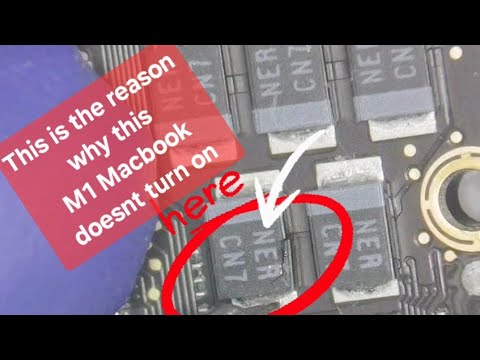
The motherboard has failed. As a major, solid-state component I’d expect this to last more than 3 and a half years. I understand there have been numerous issues with this particular motherboard (with the M1 chip - Reddit says “Rampant Logic board failures”). This is a major failure, IMHO.

Usage: light usage. In addition to this Macbook, my daughter has a work laptop, plus an iPad, plus a desktop Apple Mac (also an iPhone; she is a good Apple customer - which counts for nothing). That also means she can survive for a while without this product.

Condition: good condition, no water damage, very few scratches.

1 Like

So it won’t boot at all? If so then, yes, major failure. And I would consider 3.5 years to be subpar. Not good enough. You should persevere with Fair Trading.

Even with solid-state electronics, it is not uncommon to experience a capacitor failure on a motherboard (due to poor quality capacitors). However I would not expect that and I would not accept that after 3.5 years.

If it’s after 10 years, I would probably, say, OK, a bit crappy but I will consider the device to be at the end of its life (and hence not pay to repair it but instead ewaste it, after securely erasing the disk of course).

That hardly matters. 1 hour a day or 12 hours a day, 3.5 years is not good enough.

Usage would matter if the battery had died.

1 Like

One thing to keep in mind is that these M1 Air laptops have only passive cooling. They are known to throttle performance due to overheating and this could contribute to shortened component life.

It would be instructive to compare failure rates against the M1 Macbook Pro of similar spec but with active cooling. They could provide a direct comparison as to whether this is an inherent design flaw due to Apple using the passive cooling.

1 Like

Isn’t that the design philosophy common across all the MacBook Air models including the later M2, M3, M4, and now M5 powered models?

Assuming they throttle performance under sustained loads does this also serve to prevent overheating? Hence avoiding creating early failure.

If one’s needs are an everyday basic tasks in a light weight compact and hopefully resilient package for a laptop, are the closest alternatives any different? EG iPad with M series chip and keyboard, or the Microsoft Surface devices in a similar form factor/package?

If one is a power user to suggest there is wisdom in looking at a portable with active cooling (what ever the brand and processor). That one needs to pay a premium for a higher class of portable, possibly not something one would regret.

1 Like

Good question.

Isn’t that the design philosophy common across all the MacBook Air models including the later M2, M3, M4, and now M5 powered models?

No - they changed the physical design from the M2 onwards including the mainboard design. The M1 Airs had the same basic design as the previous Intel based models. Apple do tend to learn from design issues but they generally never admit them. Look at the butterfly keyboard and soldergate debacles if you want examples.

The M2 onwards Airs had more thermal mass and better cooling and they throttle sooner. That all points at them knowing there was a potential or verified issue.

Assuming they throttle performance under sustained loads does this also serve to prevent overheating?

It’s more to stop the CPU core from dying. I’m typing this on an M2 Pro Mac mini - the fan keeps the general running temp down to around 53º - if I run it with load, say a render for a 3d package the fans kick up to full speed and it hits around 75º sustained. This is with no throttling because the CPU package can stay below the temperature that causes this thanks to the fans.

On the Air it will reach over 97º before throttling - I’ve seen reports of 112º the M4 Air. That means that all the components will be going through cycles of heat stress that an actively cooled system never will. I saw some videos of repairs of M1 Air where the capacitors where showing physical cracking caused by heat cycling because the system gets heat soaked, killing the board.

Worth noting that these are actually fixable by a good tech who can swap out the capacitors even though they are SMD.

Video here (I have no connection with these guys but it’s a perfect example)

Finally I totally agree with advising for the Macbook Pro - the differential in price is now not so large and the active cooling and far, far better screen make them the better choice. And almost certainly more reliable and longer lived.

2 Likes

This.

Thermal cycling puts more stress on the components. A more uniform temperature is better. Whether that is achieved through active cooling or CPU throttling doesn’t matter much.

A nice computer will also give the user some control i.e. intervene at a lower temperature so as to reduce the thermal range but at a cost in performance / fan life / power consumption.

None of this really matters. The bottom line is that Apple designed, manufactured and sold the computer. Is a 3.5 year life of merchantable quality?

Honestly, even for a laptop at half the price of an Apple, I would not accept 3.5 years of life.

2 Likes

Honestly, even for a laptop at half the price of an Apple, I would not accept 3.5 years of life.

Even Apple implicitly confirm this as they offer software updates to keep them current to a minimum of 7 years. Shortest service life I’ve every seem from a Mac was around 7 years before it became obsolete.

My current Mac mini has probably another 3 years left before I upgrade and that will likely be optional at that time (Mac mini M2 Pro with 32GB of RAM 1TB of storage - I specifically specced it up to avoid obsolescense and extend its lifespan.)

2 Likes

Every single Apple computer I have personally purchased has failed in some way after a few years - and Apple has always had a stock response of ‘buy a replacement’. What is annoying about this is that in online searches I’ve found a lot of the errors I’ve experienced described as known failures that Apple refuse to acknowledge - or if they did acknowledge them they time limited the repair window.
I’ve solved this problem by no longer buying Apple computers. Framework deliver very nice modular repairable computers - they are now my go to default.

1 Like

See

for details of Australian Consumer Law.
This starts:
When you buy goods, the seller guarantees that:
goods will be of acceptable quality
goods will be fit for a particular purpose

A pair of thongs from the $2 shop does not fall within ACL. I submit that the $1500 laptop described above is expensive and does fall within ACL.

In my view a $1500 computer that lasts less than four years breaches the acceptable quality provision. It seems to me that NCAT will rule in your favour. When filing, NCAT probably has a certain format. Just tell the story, who did what when. End with what you want under the heading Remedies. Number all paragraphs. Attach anything that backs up your claim.

One issue is that if Apple want to do the repair then you lose the laptop for a while, and data may be compromised. One solution is to put all data on an external drive, with two drives suggested in case on drive fails.

On quite a few occasions I have filed against very big entities, with denials - was not us, we did not do it, there is no case, etc. Then at the directions hearing or hearing they deal. They know that they will lose and do not want a tribunal record saying they lost. The respondent and I seek an adjournment so that the respondent can pay me or otherwise resolve the matter, and when that’s done I withdraw the matter.

5 Likes

Great post but to emphasise about backup.

Honestly you should be backing up the data anyway - in my case I have a NAS running as a TimeMachine volume as a backup and this is the minimum I’d do. In future I plan to do a buddy backup where we both have an encrypted NAS volume available for backup allowing us to have a private, redundant backup at another location without relying on corporate cloud storage.

It’s paranoid and that’s why it’s best practice.

If you only have one instance of your data and you lose it through a statistically possible hardware failure, that’s really your fault, not the vendors.

3 Likes

Your advice about backups has great merit. A maxim I have used to some advantage for many decades of computing is that data does not exist until it is in three places. I have six places, including an offsite.

Another aspect is that while data programs are useful, a better way for me is to copy the exact file. If I have files Book_summary.DOC, spreadsheet.XLS, and Picture.JPG, these are the names of the files on the backup. That is, there is no need for a backup program to access the files on the backup drive. I used this two days ago when I mangled a spreadsheet, fixed by accessing the backup and copying the data.

Your paranoid comment made me smile. I’m paranoid about road safety - drivers are out to get me, will break the road rules and will not see me. Computer paranoia is also good.

Your hardware failure comment is very relevant. I have had disks fail, but it’s okay - I have backups. A good disk analysis too is here:

Crystal Disk, free.

1 Like

The topic has wandered from repair to backups. There is a now dated topic about backups where that discussion may be best continued despite its age.

1 Like

True - but disk data is something that you have to deal with if sending a computer in for repair.

  • Backup in case the computer in for repair gets lost, stolen, destroyed, otherwise stuffed up, …
  • Protection of confidentiality and integrity of the data on the disk.

The one time I had to send a computer in for repair, I did the following

  • full backup of disk
  • secure erase of disk
  • re-install operating system (so they have a bootable computer if they need it)
1 Like