Has anyone seen electronic shelf labels in use in Australian supermarkets?
I have only seen them in supermarkets overseas and on most the unit price (price per unit of measure),was not well displayed, particularly if the label was on the upper and lower shelves and was not angled to make reading easier. The main problems, apart from lack of appropriate angling out or in, were: very small print and very poor contrast between the print and the background… However, I understand that the latest technology may be able to reduce or eliminate the contrast and print size problems.
If you have seen these types of shelf labels in use in Australian supermarkets, I’d be interested in photos of the labels and/or comments on how effectively they are displaying information for consumers, especially the unit price, on shelves at various levels.
Miniso Australia stores have electronic shelf labels. While not a supermarket, it is the only place in Australia I have ever seen them.
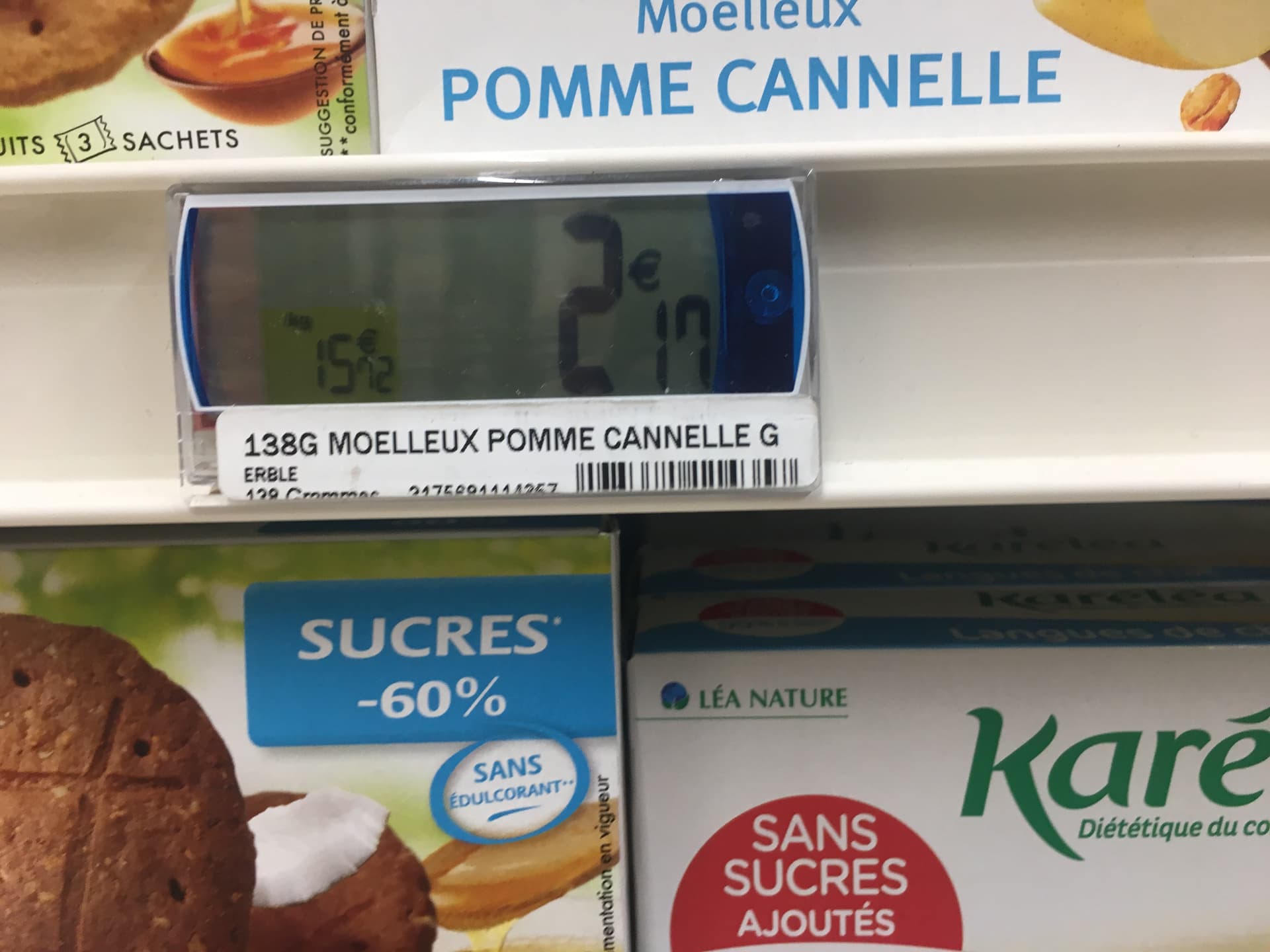
The size of screen on their labels is about the size of a match box. Not all that easy to read as they were LED screens where the LEDs were a medium grey colour rather than dark grey/black. Reading such was difficult in high light conditions.I imagine that if one was wearing polarising glass lenses, they might be even more difficult to read.
Many thanks for the info. Was not aware of this business. Will go to one to look when I am next in an area where there is one. I agree re problems caused by high light conditions. I think this is less of a problem with the new e-paper types of e-shelf labels. Will take polarising lens with me when i investigate.
E-labels come in various sizes so that can also influence how well the info is displayed. I think the large modern e-paper ones are expensive but they last longer and have other advantages over LEDs.
For anyone who wants to see what an LED e-shelf label looks like here is a pic of one I saw in France.
I was looking for some info on ESLs and I came across this.
I see your analysis on this topic is from last year… Is there any progress in this field?.. I see a few stores using ESLs on this providers website.
Whats your stand on this? Is this still a good market here in Australia?
Thanks in advance
I wondering just how far the roll out of this type of shelf labelling has progressed?
More than 3 years on from this topic opening I finally entered a supermarket which was using digital price/product labelling. Woolworths South Yarra (Melbourne). Apologies I didn’t think to even take a pic assuming they are widespread in the more populous southern parts of Oz. It wasn’t immediately apparent they were digital until the consistency from label to label and typical black on white contrast spiked curiosity. Each display is much like a large E-book reader or tablet.
Some observations:
The display labels are several times larger than many of the everyday printed paper labels I’m accustomed to seeing.
What is often too fine print for the unit pricing was much larger and more easily read. Possibly due to the much larger size of the displays compared to the card ones and backlighting
Some had a dull washed out coloured background. Assume this is the same as that used for specials etc.
You would need to check with each company but I I think Woolworths is still rolling Electronic Shelf Labels (ESLs) and Aldi must be just about finished. And some independent stores have it.
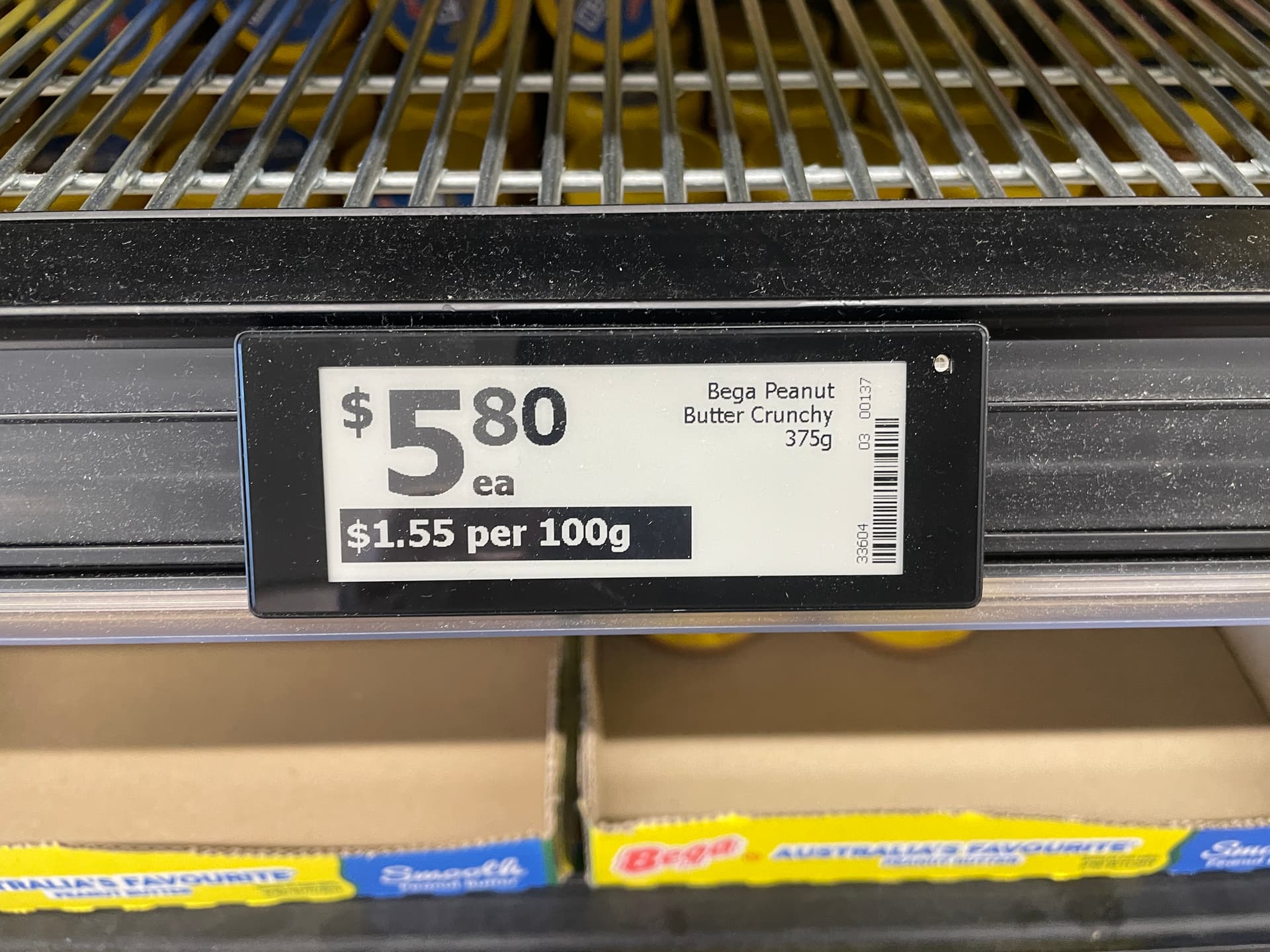
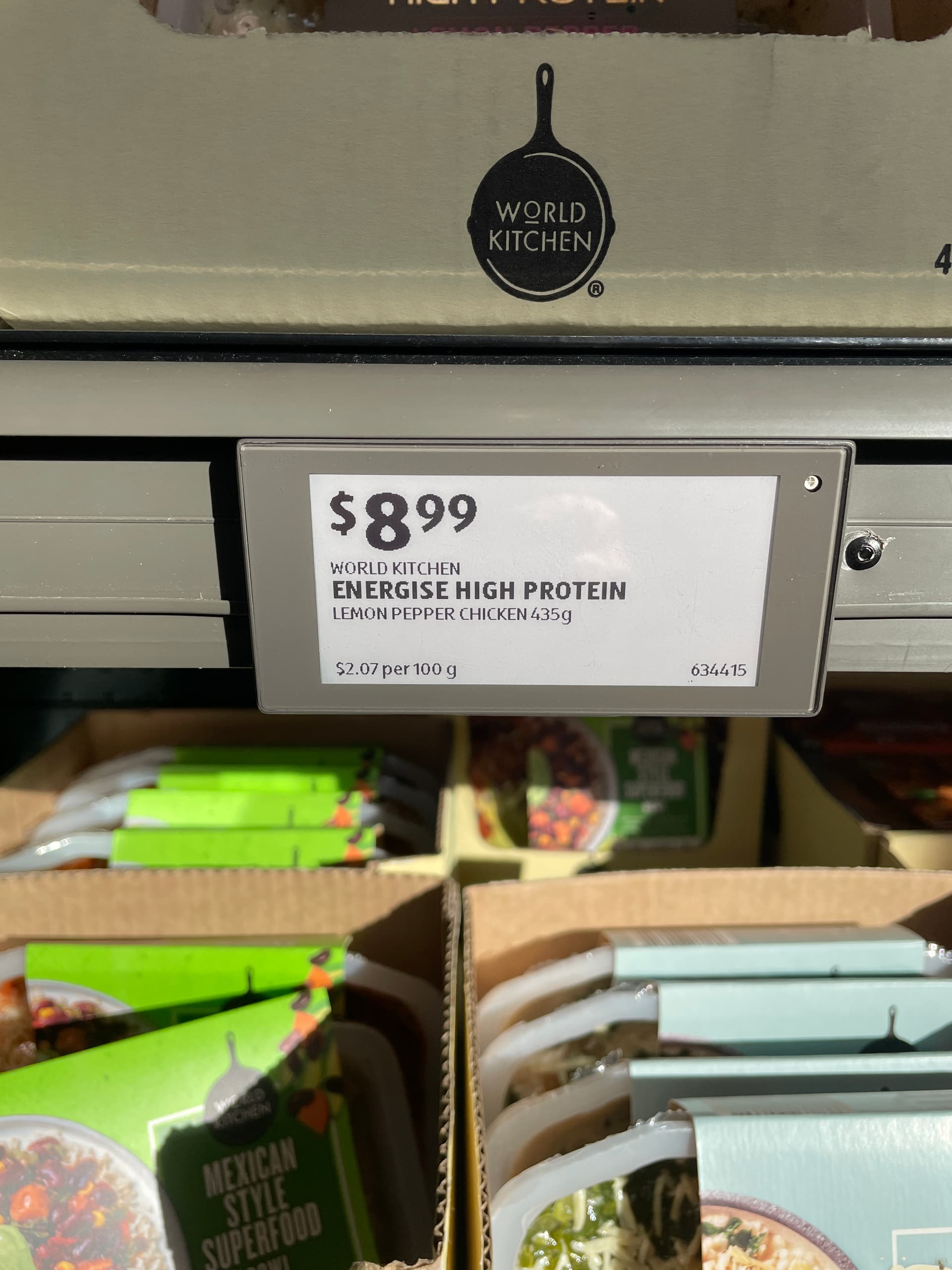
IMO, the print size of unit price info on the Aldi ESLs is far too small as also was Woolworths initially but since then, in response to consumer advocacy, they twice made beneficial changes. However, IMO the print size for the UP on some ESLs, esp when one ESL is used to show info for 2 products and on the special offer ESLs which have a yellow background, is still too small.
Re ESL size:
1. the Woolworths and Aldi ESLs are about the same size as the paper labels they replaced if you look only at the screen size not the surrounding plastic.
2. the Woolworths ESLs that you say are “much like a large E-book reader or tablet” seem to be mainly used in the F&V area and on them the UP is displayed prominently and legibly but still less so than the selling price.
Interestingly, and good for consumers, Coles (which I don’t think has started any ESL rollout) is adopting the Woolworths format for unit price display which is to show the unit price in white print on a black background.
Would be interested in comments on the quality of display of the unit price on ESLs and paper labels in various supermarkets especially the extent to which they achieve what I think should be the consumer and legislative objective - that the unit price be easy to notice, read, understand and use when viewed from a normal distance and position (i.e. no need to bend low, get on hands and knees, or stretch up).
To ask if Choice when doing the Supermarket comparison shops might add a further request to note which of the sampled outlets (ratio/percentage of outlets sampled) had updated to ESL, and for comment on size/legibility? @BrendanMays
I’ve not noticed any in Qld across the Coles and Woolworths we have used in the previous 3 months. (WW - Morayfield 2/3, Beerwah and Ashgrove; Coles - Caboolture North, Caloundra, Ashgrove, The Gap, Aldi - Beerwah, Ashgrove). Possibly I need to be more observant?
There remains a reasonable worry about ESLs making dynamic pricing easy and routine.
This company has a good overview - one of their businesses is advising on pricing strategies.
However in the US market, apparently much slower to takeup ESLs than the EU, the worry is apparently still unfounded while in the more established EU roughly 61% are using some form of dynamic pricing. ESLs make it easier to implement but from the first link, imagine picking an item from the shelf and having it scan a different price because the price just dynamically changed.
In addition to watching the quality and readability of ESL we probably should be equally focusing on pricing strategies that may or may not change as that technology is introduced.
I agree on the need to also look at the new pricing strategies, such as dynamic pricing, possible for retailers after the installation of ESLs, esp since its use by supermarkets seems to be increasing .in the UK and EU.
Surprisingly , it does not seem to have been mentioned in the ACCC supermarket report.
Supermarkets that issue catalogues showing the prices that will be charged during a specific period would need to be very careful about changing those prices before the end of the period since that could be considered to be misleading.
In deed I do. I was in Aldi on Sunday and looked more carefully at the labels - “display devices” which appear to clip or lock onto the extruded aluminium rail. Agree as you have previously advised the use of a small font for the unit pricing - in these examples Aldi most notable. Assume the units are E-ink based.
The same as WW and Aldi are also in one of the nearby bottle shops. With the approval of the shop staff who advised they no longer spend hours each cycle tearing out the printed price labels from printed sheets and doing manual swaps.
The Ashgrove WW completed a refurb earlier this year, removing at the same time the express few items customer checkout facility.