For the scientific and mathematically inquisitive.
Fuel or energy consumption for transport is a complex discussion. In particular when looking at ways to reduce fuel use (ICE - petrol, diesel, biofuel etc). Also relevant to other types of motive power such as BEV.
P.S.
Someone might like to explain rolling resistance and the differences between laminar flow and turbulent flow. Budding F1 vehicle aerodynamic designers welcome.
I’ve collected some recent posts to add to the discussion.
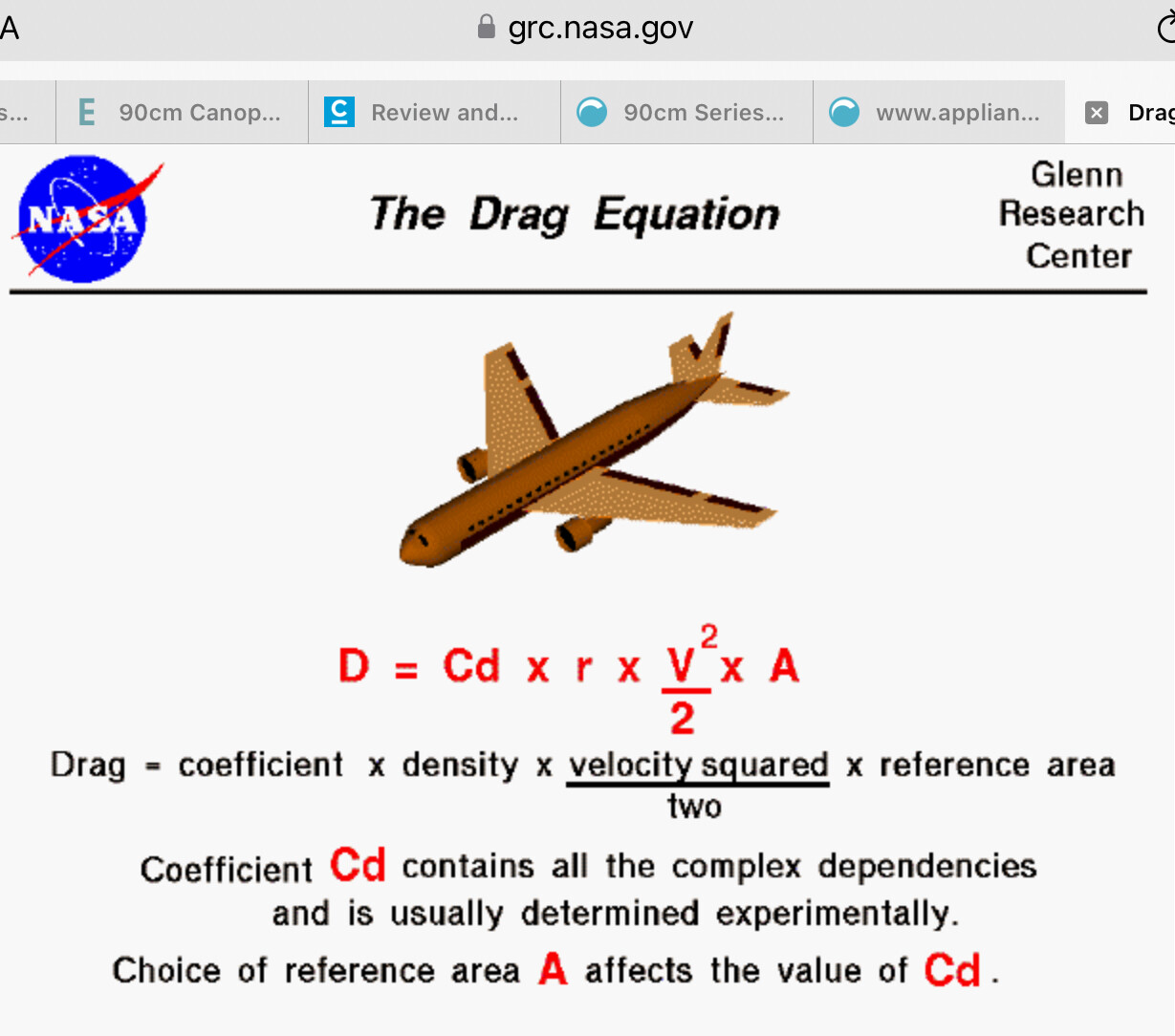
It should be noted that the drag due to air resistance increases exponentially with speed as in F=1/2V^2 so double the speed, four times the drag.
The same thing applies in braking. Double the speed, four times the distance to brake. Which is why road safety authorities bang on all the time about reducing the speed limits.