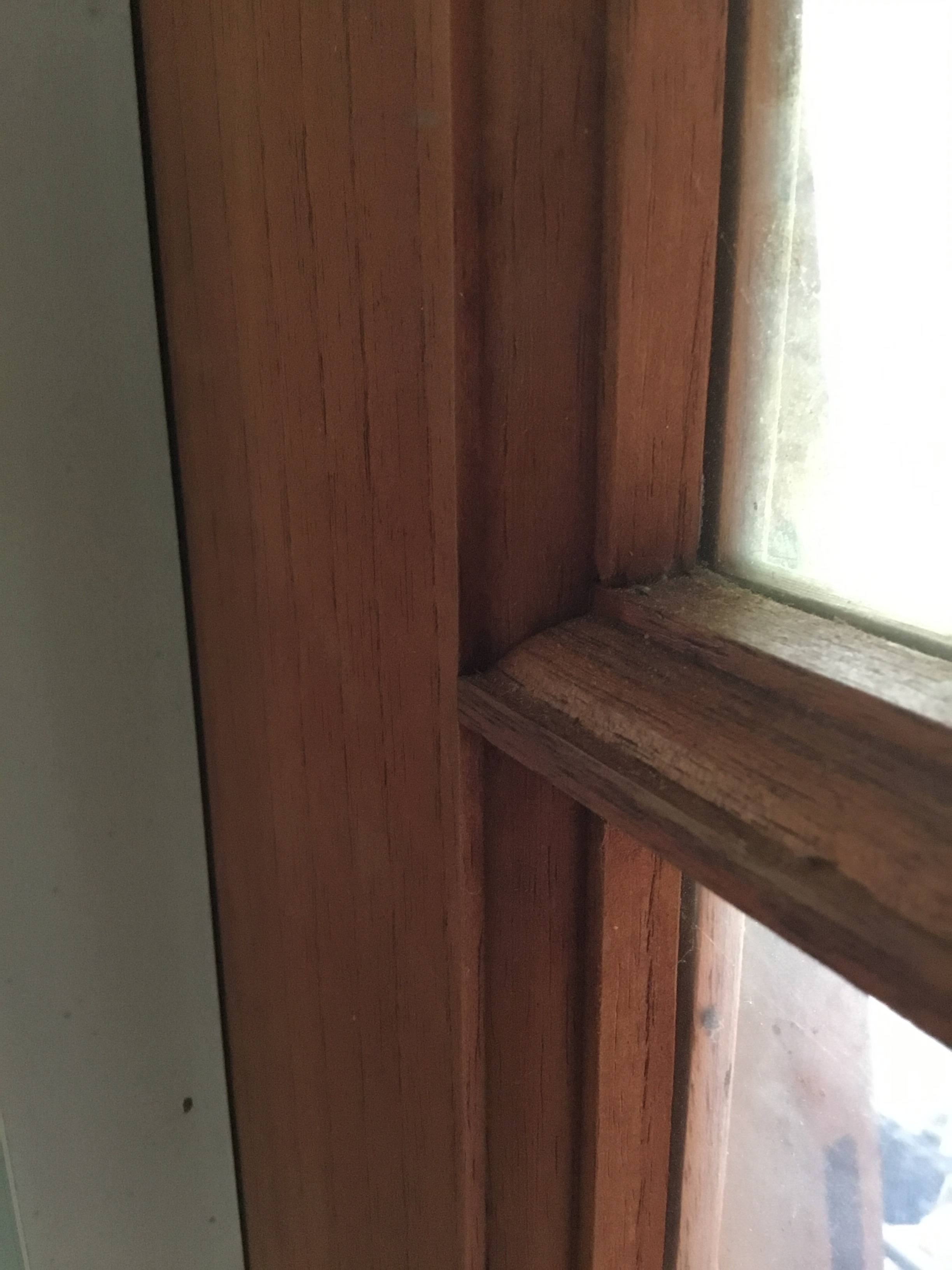
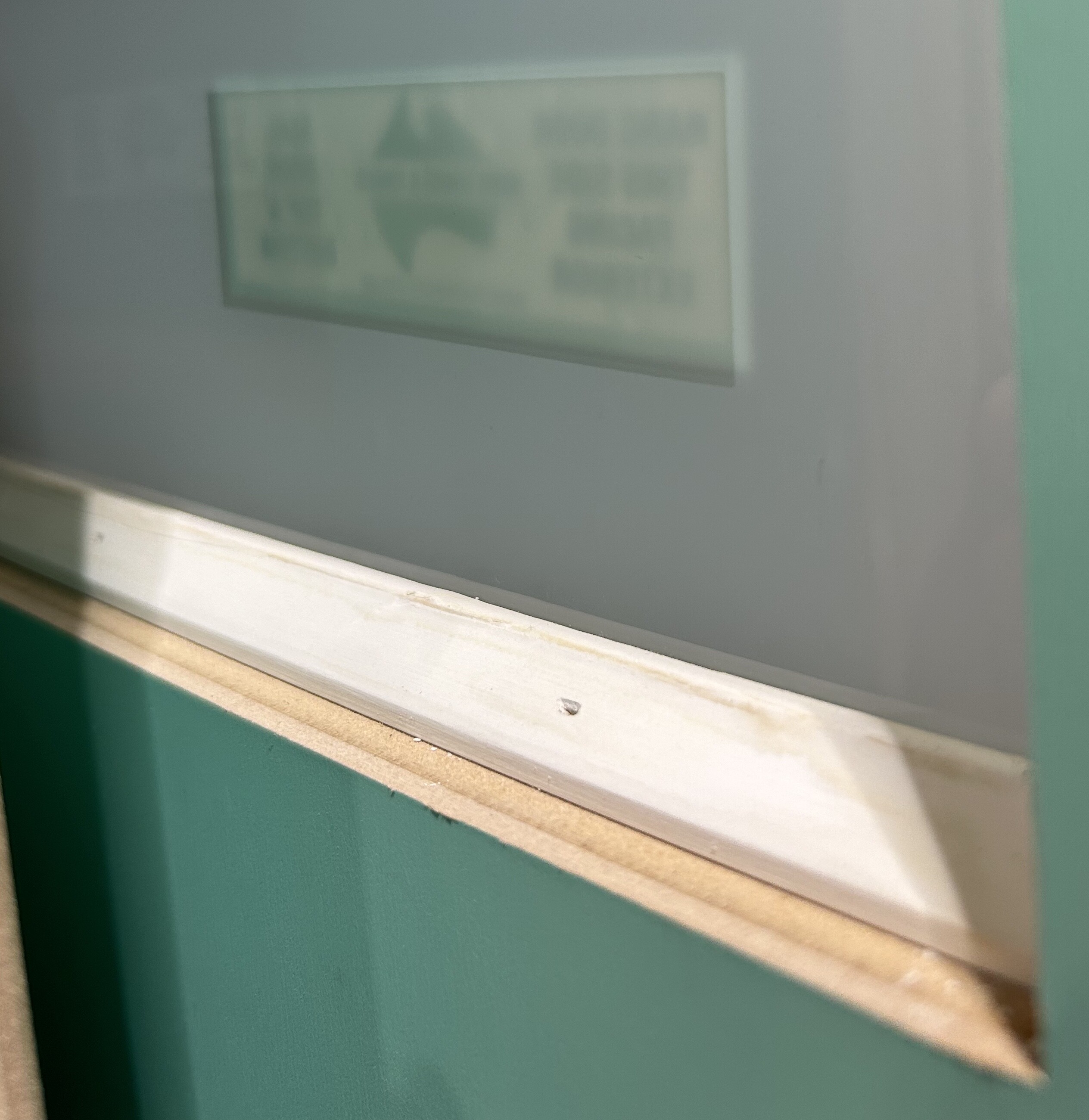
Cheers, so the inside and outside are both bevelled, one machined HMR MDF, the other side a bevelled timber beading. The timber beading on your door being pre-undercoated which means timber is unknown. Whether the undercoated timber beading is moisture resistant is unknown. The HMR MDF is moisture resistant.
It tends from a point of view of not knowing all the info, the HDR MDF should face externally.
I agree that it might be more aesthetically pleasing, but, sometimes what is more aesthetically pleasing might not be practical unless specified in the contract to the builder/installer.
If the contract stated something, the builder/installer is then required to meet the agreed specification. If the standard beading isn’t moisture resistant, then a special door with moisture resistant beading would need to be made for the job. If special arrangements aren’t specified, then a standard door installation occurs. It might be that you have a standard installation for that door.
If you want the door changed such that the beading is on the outside, this may be what is called a ‘change in scope’ or ‘variation’. A change in scope/variation is that agreed by all parties and costs are passed onto the homeowner. In such case, the builder would source a door where moisture resistant beading can be facing the exterior.
There could be differences in doors made for Qld conditions compared to NSW. The Qld doors could have moisture resistant beading to allow doors to be faced in either direction (including to protect the beading from high humidity conditions when installed internally). In NSW doors, the beading might not be moisture resistant hence only HMR MDF bevel only facing externally. I don’t know, but this is plausible and why Hume QLD and NSW personnel will be giving the answers they are. They might only know the products they make/sell in the state of their operations.
If you want the door changed, discuss with the builder what would be required, its cost and that it would potentially be a change of scope to the contract.
Hume NSW according to prior posts by @MKen22 indicate Hume NSW supply their doors labelled for the beading to face externally. It’s the QLD Hume staff who have indicated the different requirement for the beading to face internally. If that assists to clarify. One would expect Hume Doors National office service support to be able to clarify that minor difference formally. It appears to have avoided doing so directly.
The suggested norm by Hume QLD product is at odds with what I’ve observed. It includes one home we owned that I recollect had a Hume glazed entry doorway.
It is worth noting the Hume rep for Qld, which appears to service the northern NSW area in question indicated:
beading should be internal
A Hume rep will know their products and ensure they are installed correctly. They need to provide warranty for their products.
I’ve always reckoned that beads inside is the better option, key reason being security.
1 Like
A common observation for patio doors. Although in Australia for insurance purposes these and all entry/external doors require dead locks. Also lockable or recessed patio door bolts where applicable. Hence removing the beading and glass achieves little if there is a deadlock as expected by one’s insurer. FWIW many unauthorised entries are opportunistic through unlocked doors or by applied force at the locking point on the doorway.
For a modern door relying on a silicon sealant the glass panes tend to be well adhered to. Removing the beading if external takes time and tools. It also does not assure the glass will be readily removed without breakage.
If one takes the view that internal beading is a more durable solution, it’s worth looking at the profile on the other side of the glass (external). This is typically a raised profile without an effective bevel to allow water to run off when rain or water is driven onto the glass panes. It can vary but typically:
As noted in previous references linked to Hume Doors, irrespective of which side the beading on the door faces, the warranty requires a substantial weather protected awning/portico/ entry area.
Wisely one should follow the advice of the manufacturer/supplier from whom the door was purchased on which way and how to correctly install the door.
This is also common sense, no wooden or wood composition external door should be exposed directly to the weather. It doesn’t matter how you do the bead (if there is one) it will not last well. Many people tend to assume that if it is painted properly it will be fine. It won’t last for more than a few years.
Did you point out to them that you are NOT in QLD, and therefore they re required to comply with NSW regulations which apply to where you & your home are located? Queensland rules do not apply in NSW. This is not the NRL State of Origin where ‘Queensland is everywhere’.
Others would agree, however (It can be useful to read through prior posts to better appreciate the issues raised) it is not a building regulation of either state AFAIK. It appears to be a supplier only difference due to how Hume Doors choose to manufacture and supply products ordered through their Queensland Office.
I previously indicated as a Queenslander I have recently purchased new exterior grade entry doors from a reputable well known QLD based business. They followed the same principle as Hume NSW supplying the doors with external facing beading. IE no difference between either state.
Note:
It was once common that national businesses set up independent supply chains in each state, and restricted sales by locality. Including at state borders. Really crazy if one lived in western NSW or Vic with Adelaide so close. Similar for Norther NSW. It’s no longer the way, hence with Northern NSW being much more convenient to Brisbane QLD it’s common for businesses located in Nth NSW to be serviced from over the border. See note re competition law and the ACCC.
Why restricting sales of a product by region or area has changed over time.
I DID read the previous comments.
It is irrelevant that it was ordered through the Queensland office. What is relevant is that it is being installed in a NSW location & therefore NSW legislative requirements need to be met. Not Queensland ones.
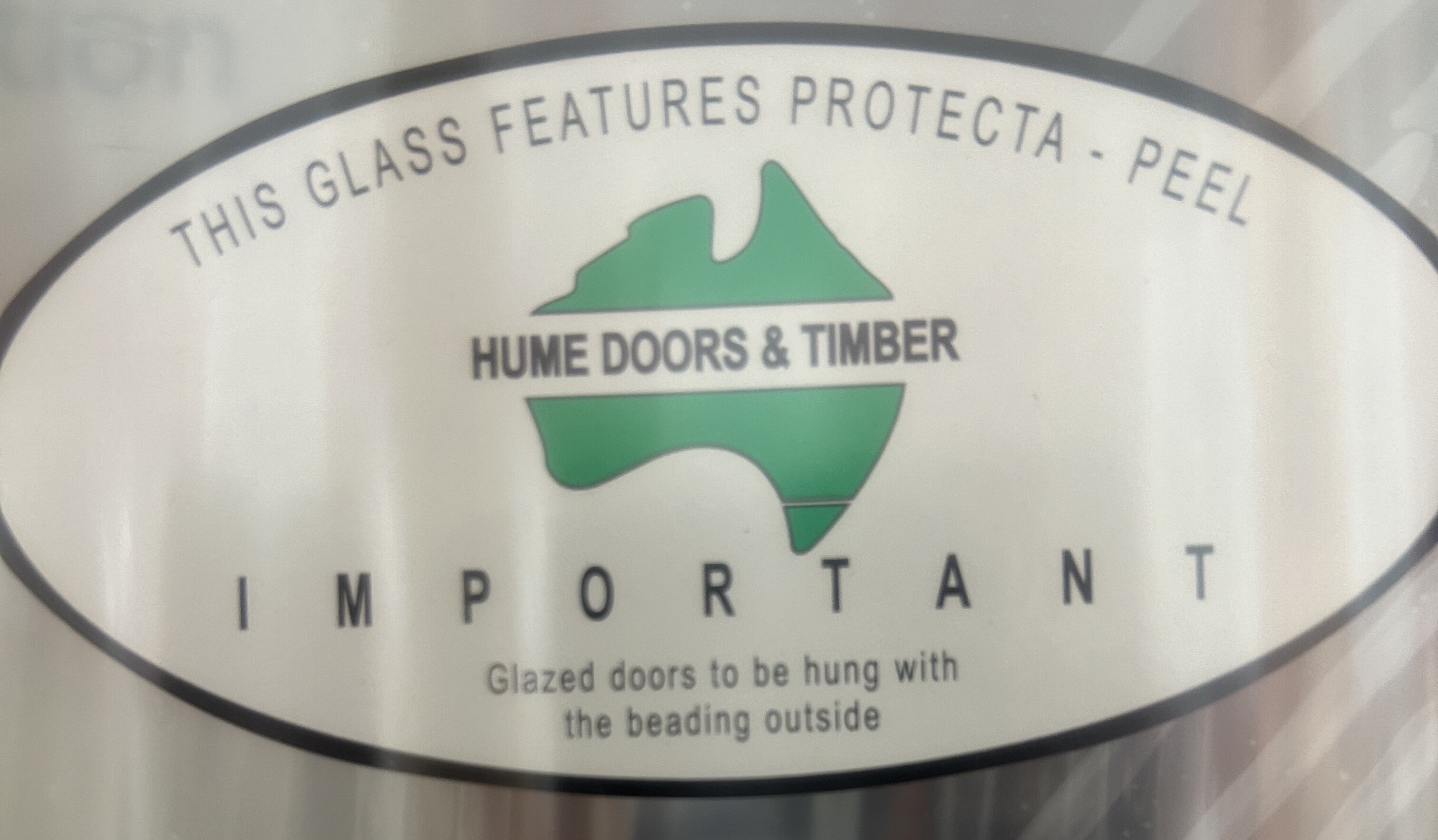
You could point the builder to the following requirements as set out NSW Fair Trading statement on Standards and Tolerances. At Part 9 in regards to doors and windows. If the manufacturer states the bead is to be to the outside then the requirement is that it should be fitted with the bead to the outside. It would appear, according to the Manufacturer’s label (so are instructions) that the door has been defectively fitted. If the product fails due to complying with the requirement or that the fitting was done by a builder against the recommendation, then ACL protections are in place. Even the cost of rectification would have to be borne by whomever either fitted it incorrectly or by the manufacturer who provided a door that was not fit for purpose.
9.1 Installation of external windows and doors
Unless documented otherwise, external windows and doors are defective if they are not installed and flashed in accordance with the manufacturer’s installation instructions.
In the National Construction Code (NCC) there is no statement about how an external door’s beading should be mounted either externally or internally, in the attached Schedule for NSW in the NCC there is only a blank page intentionally left so.
1 Like
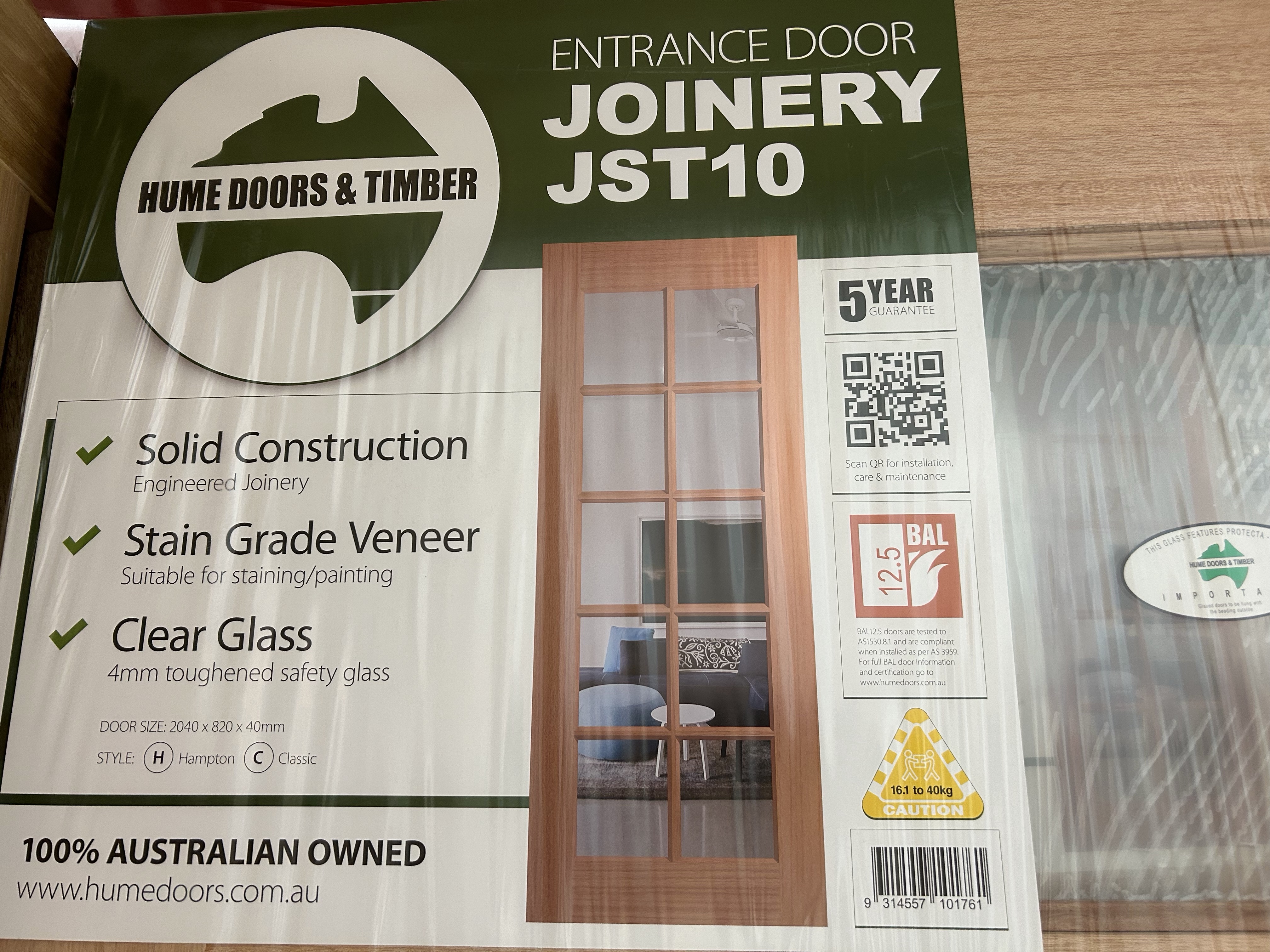
Looking at Hume’s actual product, some clarity?
The same observations @MKen22 had included in a prior post as to the product labelling. Some added comments.
Product Hume supply to Bunnings QLD has the following requirements on the labelling. The requirements do vary - according to the door construction, intended use and style. Glazed doors to be hung with the beading outside.
The first example is of a solid core timber feature entry door. Typical of those we have had on our previous newly built Queensland homes.
Door model.
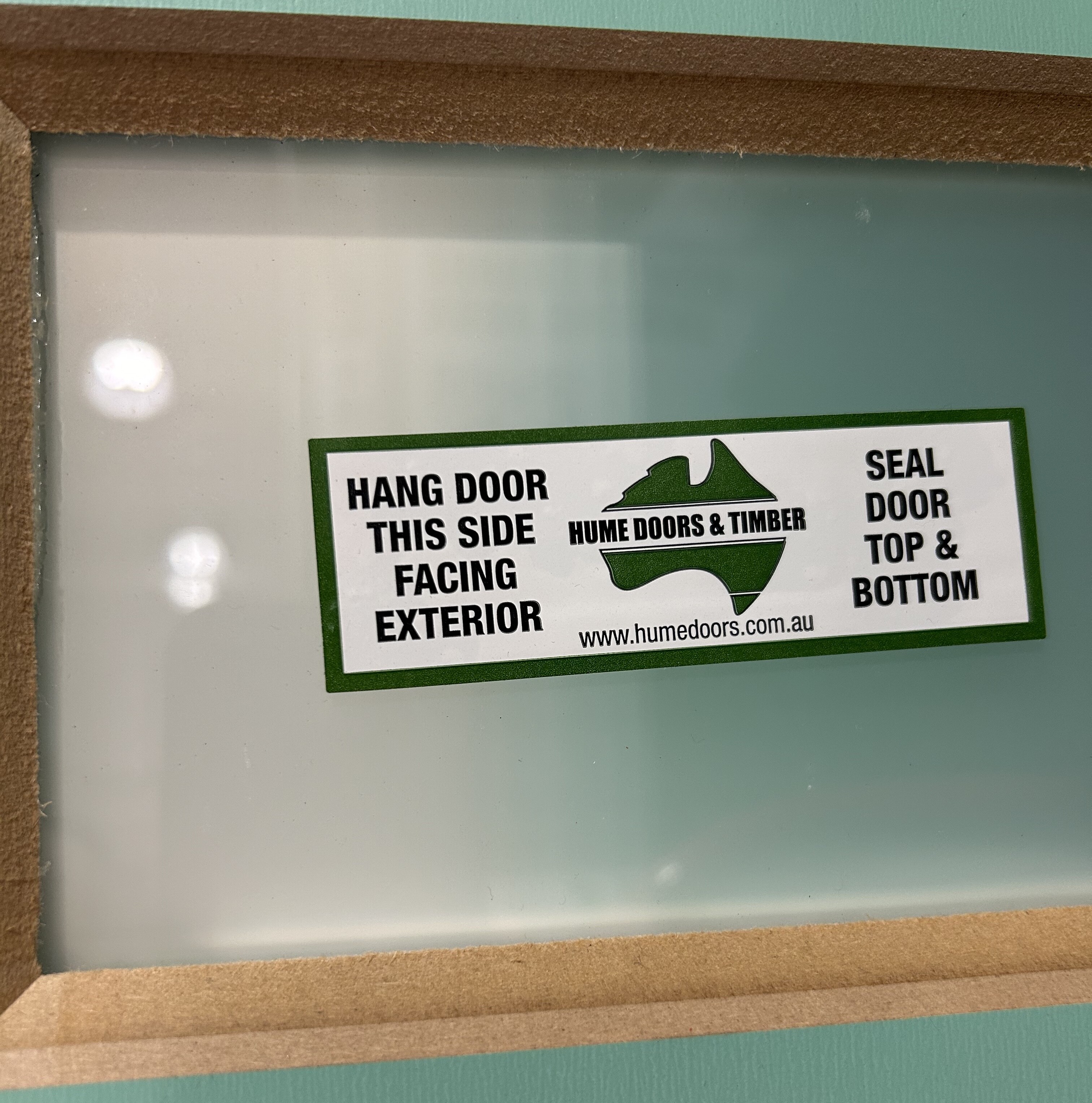
Alternately if it is a Newington solid core door of MDF construction. This allows for a variety of more modern glazed designs. There is a very different label and the opposite requirement. To note the excess of silicon sealant extruding from the edging and variable finish of the MDF in this example. Something that prep before and sanding between coats would address.
The internal finish of each panel uses a concave (scotia) profile moulding as the bead to neatly secure the glass. The flat profile on the MDF would not suit if facing the weather. The moulding white primer is typical of indoor grade pine. External might be a pink or blue grey or … to ensure the different grades are not misused.
Nothing more to say re supposed interstate differences.
P.S.
I just happened to be in the same aisle for a short roll of sarking as our more more convenient local Mitre10 only stocked $100+ or longer rolls.
1 Like