This is my first post and I’m not happy about the decision to stop reviewing gas ranges.
This is just something that should be reversed because gas is not going away anytime soon. The science in producing enough electricity without fossil fuels (efficiently and at an acceptable cost) is just not there yet, but you know that already.
That ability is decades away and besides why make such a hasty decision as this is not something major world communities are also following through with. They’ll still be using gas as we will be, industries can’t function without it. That all said I’l be in the market for a new gas range very soon and I hope to see new reviews to help me with my Choice.
Why don’t you ask the readers if they’d like you continue reviewing gas ranges, that’s the best way to gauge what we want.
Per existing topic both Victoria and the ACT have simply banned new gas installs. (Perhaps in the meantime other states/territories have followed suit.) So maybe Choice just reads the writing on the wall and chooses not to expend its finite resources on reviewing - unless you think that these jurisdictions will any time soon repeal those bans.
Welcome @Steve55. While Choice’s decision may be inconvenient for some the general buying guide is still available. Gas cooktops are still being sold by major retailers and speciality suppliers. The cooktop buying guide is useful in which features to look for and what to avoid.
We needed to replace our Westinghouse stove (aka range) - an all gas (oven and cooktop) unit last year. Similar units are few and far between. We found several with gas cook tops and electric ovens, however the electric ovens looking to the model sub numbers in reviews including Choice rated poorly. Hence a decision to purchase the cooktop (gas) and oven (electric) as seperate units.
Our gas supply is from LPG bottles and also provides our hot water, with no added need for household heating. The replacement cook top is a Miele with LPG conversion. The replacement oven is an under bench electric which works well and required only a local 15 amp circuit. If one has gas for other needs it’s a personal assessment as to whether one can justify an electric replacement. Our experience suggests the gas consumption is not significant compared to other uses, and advantageous when we have had power outages.
WA and Qld for better or for worse have not followed suit. WA has stated it’s intention to not ban gas in homes. The volume of gas (NG and LPG) used in homes in both state is relatively small compared to Victoria which may go partway to explaining the difference in priorities across the states and territories.
P.S. Topic Title and Category revised to improve results when searching.
Many gas appliances, our Miele cooktop for one, will not work without power. They have safety features to automatically relight a flame-out and if they fail after a number of tries they turn off the gas. The valves are normally off requiring electricity for them to go on.
It is not just electrical appliances. The LPG BBQ is our backup. Sans electricity the food in the fridge and freezer is of greater concern than our ability to cook it.
On some gas cooktops you won’t even be able to light the gas in the first place if you have no electricity (it would require using a match). Maybe if you are lucky though, once lit, if it stays alight, it will work without electricity.
You can theoretically use a gas fridge.
But my question was really a look at a future of no gas appliances, and a look at the whole house.
Your food is going off in the fridge, and you can’t cook it, and your hot water is not, and you can’t boil the jug and you can’t heat your house.
Electricity being a single point of failure would fail any kind of basic analysis. Maybe we need bio-gas.
Solar panels, Wind generators (there are some newer residential units starting to appear), Community batteries and large scale storage are some of the ways to mitigate the loss of networked power supply from other types of generators. Having a small gas or other fuel type backup for the very rare case of long duration blackouts, or backup gensets that plug into the household power circuit are other options.
We have had two long duration blackouts in our new house. We have solar and a Tesla battery on one phase circuit (of the 3 phases). This circuit provides power to the lights, the fans, the stove (not the oven), and the power circuit that feeds the back third of the house. This ensures we can keep our medical equipment running, fridge/freezer going, our internet running (and VoIP), lights on and fans for cooling. We have run this successfully for 2 days this way. Each day one set of panels recharged the battery and supplied the circuit through the battery. We have now joined the Community battery which supplies a maximum further 4 kWh of power each day, though when islanded from the grid the Community battery at the moment would be unavailable to us. Future iterations of Community batteries may see this limitation disappear.
There is certainly a rising tide of evidence that gas cookers in homes are not good for human health. This is particularly so if the cooking area is not well ventilated and if no extraction devices are installed. Couple that with the climate change impacts of using fossil fuels and it makes gas usage not very environmentally friendly.
This is a warning of things to come. Gas is becoming more and more expensive to supply, especially where the number of customers is small.
Solstice Energy chief executive Phaedra Deckart said switching from piped gas to bottled gas or electricity would be “better for customers in the long run”.
“The basis upon which the network was built assumed a much larger demand and a much greater number of customers,” she said.
“We have tried everything to make this network viable, however, it is a very high-cost network to truck compressed natural gas to each of these regional towns, and ultimately, costs are going up for customers.”
Solstice Energy announced a 50 per cent price increase to the 10 impacted towns last Monday.
Customers had already been hit with an 80 per cent increase in January 2023.
Ms Deckart said Solstice would need to continue raising prices every year for its compressed gas service to remain viable.
There is an existing community topic more appropriate to discussion of the broad concerns and background to gas supply, use in homes and elsewhere. It will keep us on topic if we can use the following topic for discussion not directly related to the Choice review decision, thanking all in anticipation.
Hi Mark, as disappointed as I am for the people affected by decisions made by politicians, my topic is not connected to that, it’s purely about me being quite peeved at Choice.
It’s nice to have a tidy Community, that’s why I looked for an appropriate topic before starting a new one to post mine in but nobody was saying what I’ve said. Sorry to disagree with you in the manner you moderate.
To clarify if it was not evident. The intended message was not to end constructive comment specific to reviewing gas appliances. Rather to redirect or encourage any diverging discussion around the supply and ongoing use of gas as well as upgrading to the already existing topic/s.
P.S. The more recent and general discussion has been merged to a more appropriate topic. More about how the broader community views gas use and where there is evidence of a reduction in consumer demand.
I can see where you are coming from, but I can also see Choice’s point of view as well.
I agree that Choice decision to remove testing of gas cooking appliances might be seen as being premature. This is particularly the case that in most areas of Australia, gas cooking appliances will continue to be sold and available for purchase. In areas where state/territory governments have introduced future restrictions on new gas connections and/or new gas hot water installations, anyone with an existing gas connection has the ability to replace their existing appliance. Victoria recently reversed its decision in relation to banning gas appliances recognising consumers want choices.
However, Choice has decided at a corporate level to cease the testing of gas appliances. This decision, while it could be easily argued is premature, should be respected. Businesses and organisations often make decisions which impact on their customers. Whether it is removing product options or facilities (a new product model that no longer does something the old one did, a magazine/newspaper no longer doing a regular column) or no longer selling/manufacturing a product (a product line dropped or a retailer choses to no longer sell it).
Choice in making decisions has to balance consumer trends, the political environment and its own reputation. Choice in balance believes not testing gas appliances is in its best interests into the future. It is worth noting that I personally will make decisions in relation to appliances which best meets and serves my needs. In the past it has been in agreement or disagreement of others, but it is.my prerogative to do so based on what I need.
While Choice has chosen not to review gas appliances in the future, there are websites online (using a simple internet search of ‘gas <insert oven/cooktop/etc> review) which provide alternative sources for reviews. These other websites can provide useful information should one be wishing to buy a gas appliance.
I reiterate my objection to both message and action, my topic has nothing to do with the subject of gas supply or similar, place it elsewhere or delete it. Thank you Mark.
No I haven’t said that. I haven’t checked changes in models over time, but know most manufacturers still make (and sell) gas appliances. As I indicated above, manufacturers know consumers want choice and will offer such choices until such time there isn’t a demand for gas appliances. No demand could through changes in consumer buying patterns or legislation in relation to their sale. It is unlikely Choice’s decision itself will persuade a manufacturer to cease making gas appliances.
I can’t answer for Choice, but from my knowledge of Choice I addressed my own beliefs, namely:
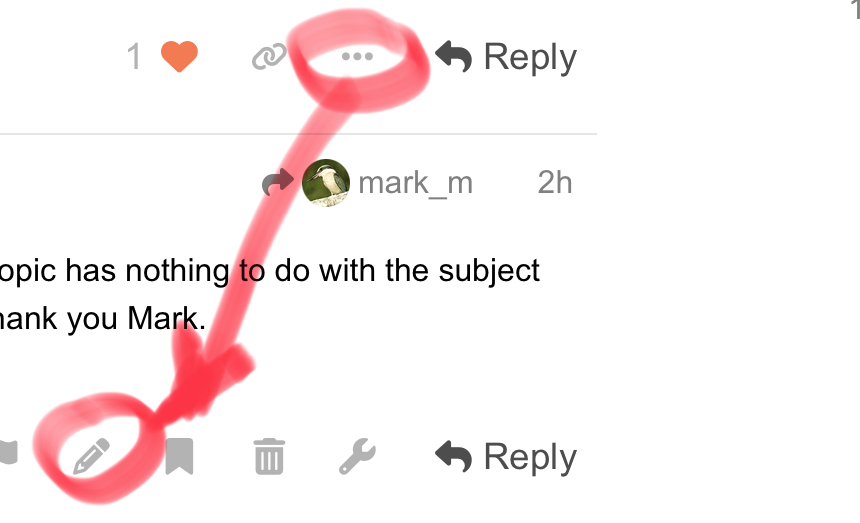
For moderation and consistency with the ongoing discussion posts by 2 other contributors were also merged to the alternate topic heading. You are welcome to edit your previous posts or delete by selecting the pencil icon. It’s revealed by selecting the 3 dots to the left of the reply to option.
That is abundantly clear. Beyond that though it is not clear what specific outcomes you are seeking. Are you expecting any clarification or response from Choice itself? You should note that various posts here, including my own, are mere speculation, informed opinion but nevertheless lacking any official standing.
It may also help to link to any web page that specifically supports a contention that Choice has made such a decision, so that we can all read the same material.
No need to link to any page, see Choice mag July ‘25; page 7; writers Rosie Thomas & Matthew Steen. I’m not wanting clarification from Choice just a poll as to what the readers think. They love to poll us on everything, why not this topic? Thank you for the clarification regarding your posts and if I come across as abrupt with my post, then I sincerely apologise.
Sure, we can easily create a poll for that on here. It won’t be an official CHOICE poll just a Community one but we are happy to do that today for you.