I certainly agree that the ACL does not set the start date of a warranty to a purchase date. I also fully support your statement that
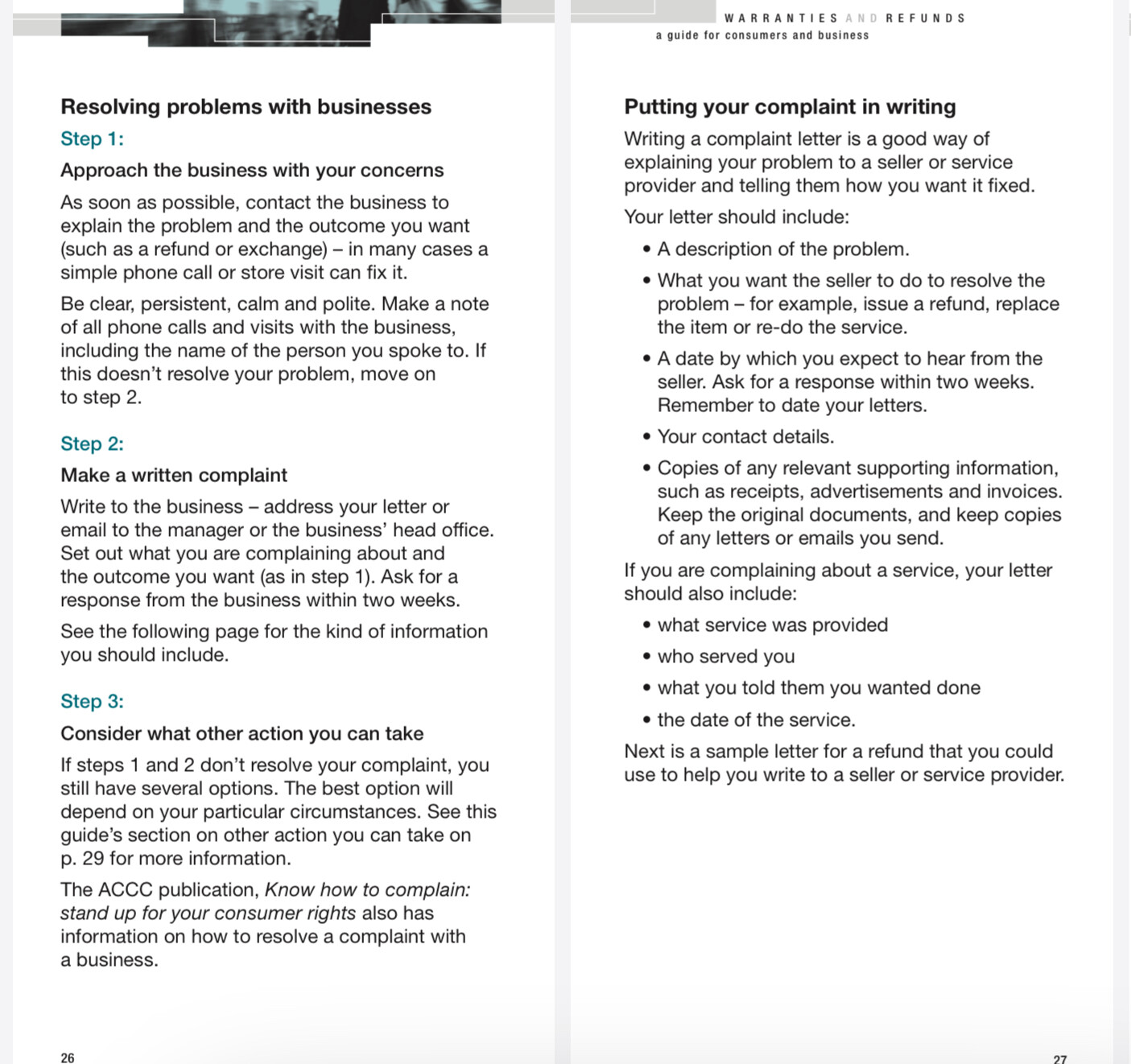
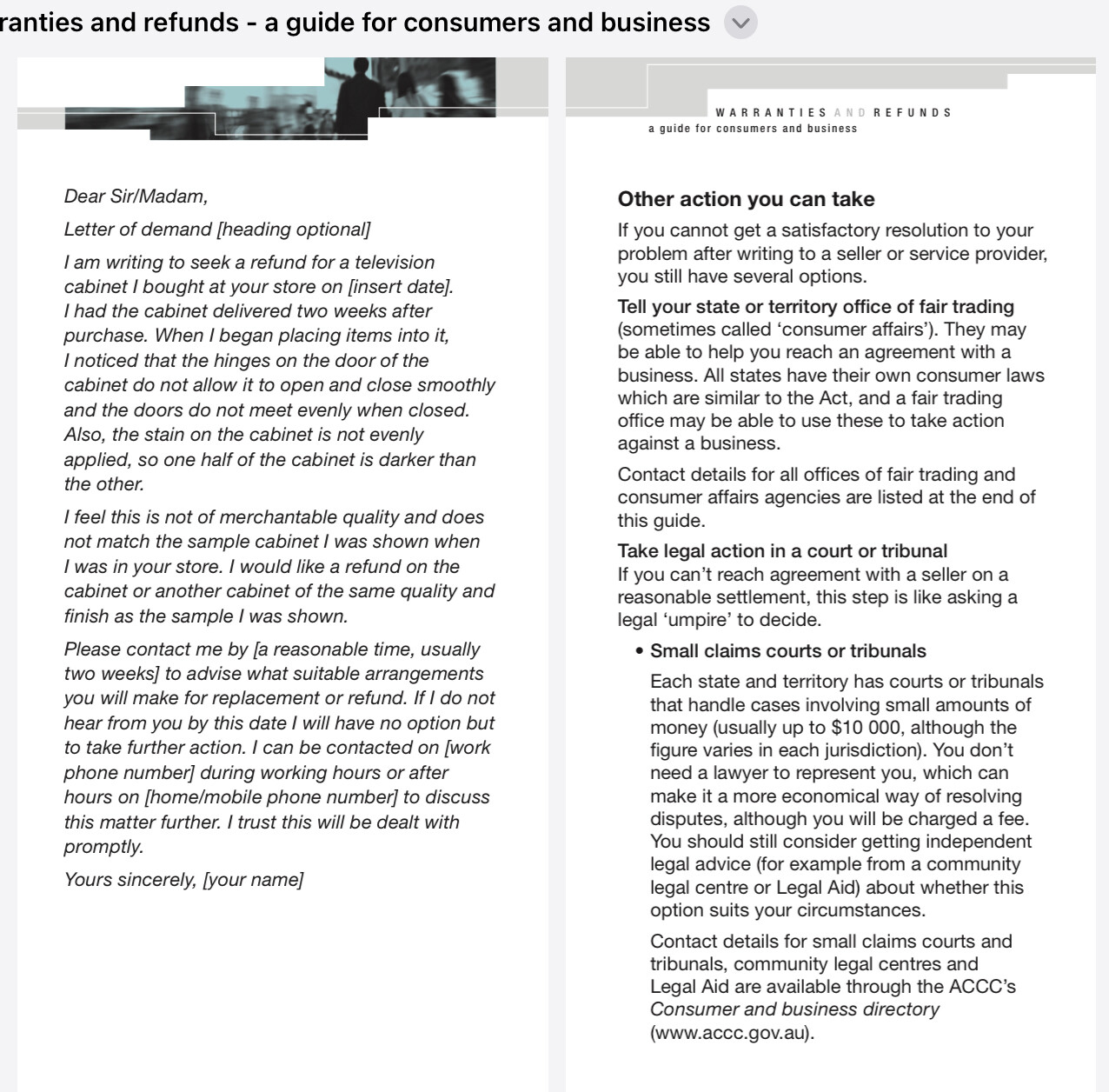
@nikkig should consider complaining using their ACL rights to see if they can get a resolution in their favour.
ACL does allow the seller to set conditions regarding the warranty so the seller can set conditions on when a warranty starts and ends, and any other special conditions that need to be met e.g., serviced at abc defg hijk industries to meet the warranty terms.
Some warranty terms can add significant benefits to a consumer such as providing refunds for change of mind returns. Seagate offered data recovery for certain purchased computer drives if they failed (this recovery service could add up to hundreds if not thousands of dollars of savings compared to a normal paid recovery).
Things like cosmetic issues outside of ACL basic coverage may be covered, as an example it might cover a colour fade after some period of use, some may provide coverage of the item for the life of the initial purchaser no matter how long they live after the purchase. Some even cover for what would be fair wear and tear which ACL does not provide cover for. Raco would supply new nuts and washers for their pot lid knobs/handles if they were ever lost, this was part of their warranty and this cover extended beyond the life of any owner whether the original owner or not.
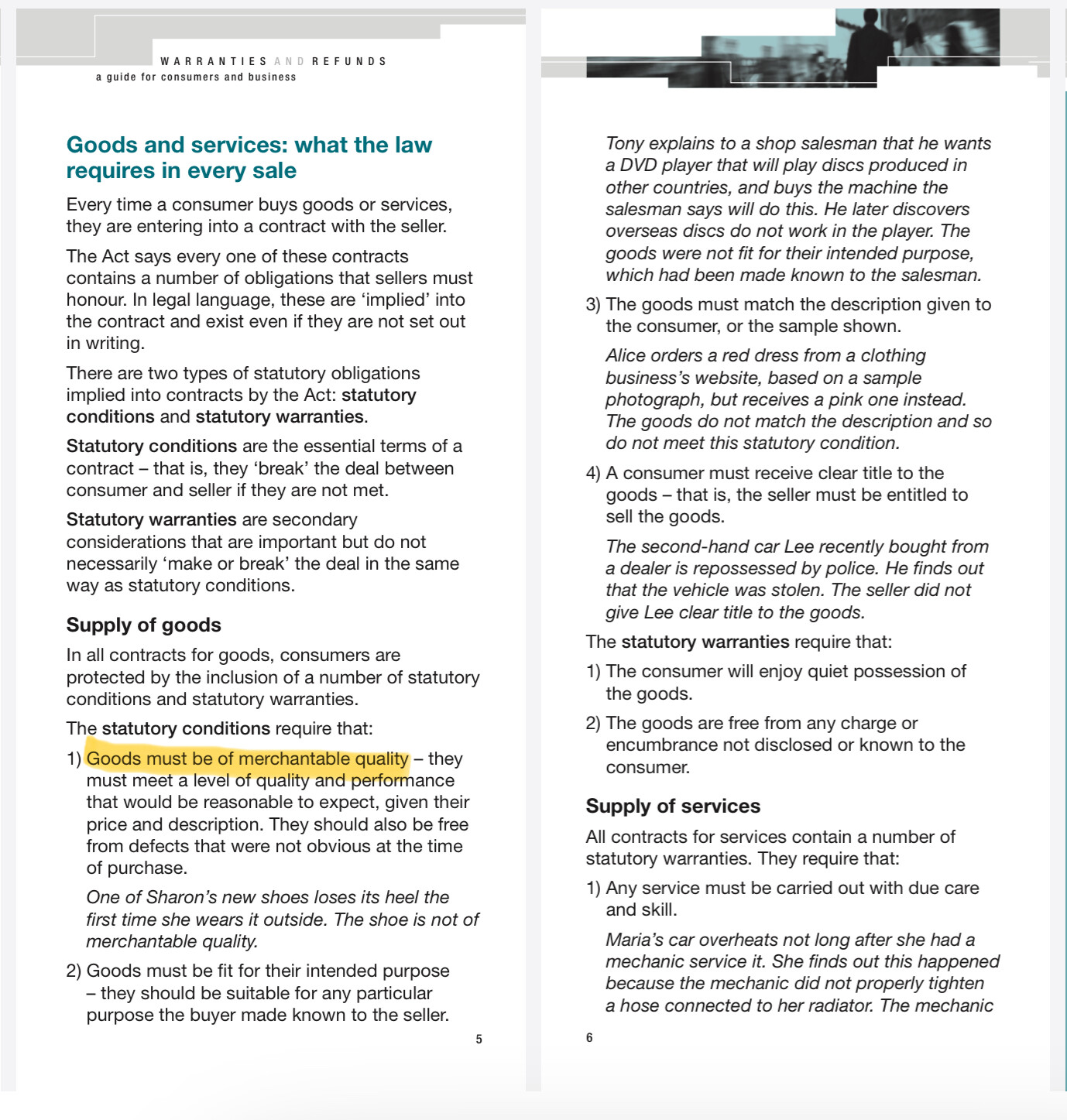
These warranty terms can’t reduce, replace, or remove ACL rights. Anything in the warranty that attempts to alter those ACL rights are void.
In Innovations Terms and Conditions they do make it clear that the warranty starts from the time of purchase “All products are warranted to be free of defects in workmanship and materials for a full one year from date of purchase except personalised items which have a 30 day Supplier’s Warranty”. So for warranty rights they are right in their statement and it does comply with ACL rights that the warranty period had been exceeded. If @nikkig had made their complaint just 4 days earlier, they would have retained the warranty rights.
If instead the warranty said that no refunds or repair were possible after x number of days, this would be illegal and so voided.
- Warranties are extra promises that a business makes about the quality of a product or how it will fix any problems with a product or service.
- Warranties apply in addition to consumer rights to a repair, replacement, refund or cancellation when there’s a problem with a product or service.
- A business must honour their warranties. They must include certain information in any warranties against defects.
In addition to consumer guarantee rights, businesses can offer warranties.
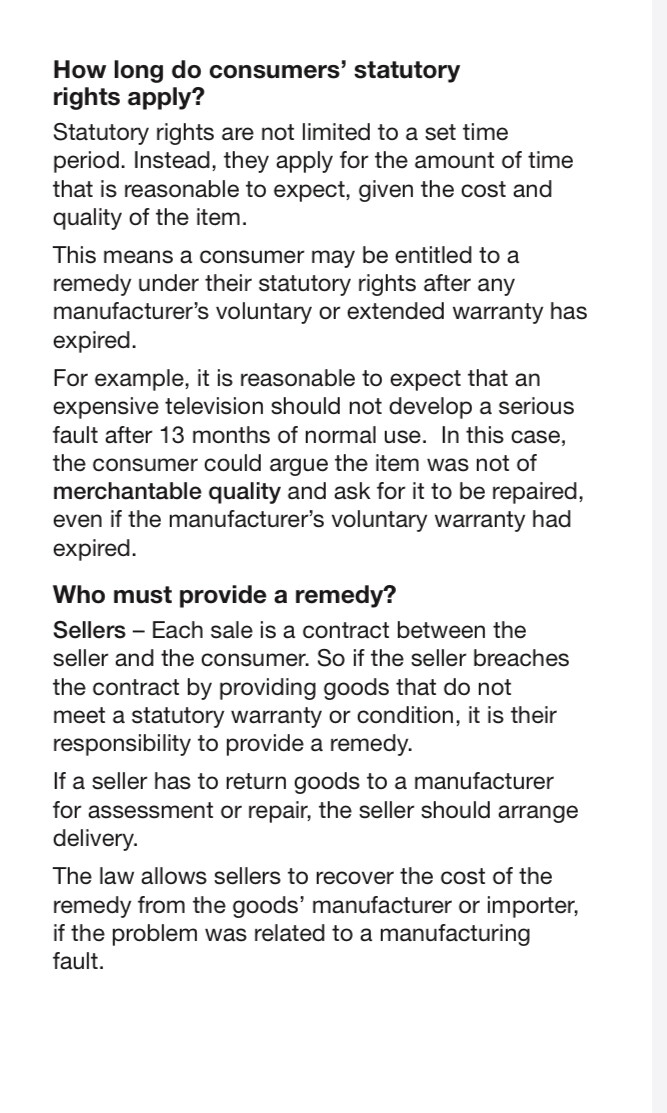
Warranties can’t replace, change or take away a consumer’s basic rights. These basic rights can last longer than a business’s warranty.
A warranty is a voluntary promise that a person or business makes when selling a product or service. Once the consumer buys the product or service, the warranty becomes a legal right. Businesses must comply with any warranties they have provided.
The terms and conditions of a warranty may require the consumer to do certain things in order to keep the warranty.
Example
A warranty requires the consumer to have a product serviced once a year.
If the consumer doesn’t do this they can no longer make a claim under the warranty when there’s a problem with a product.
But in this situation, the consumer still has their basic consumer guarantee rights, and can still ask the business to provide a remedy for a problem with their product under consumer law.
Fitbit had such an issue and were fined $11 Million for making the false representations about time periods when it came to faulty products. Their warranty terms could not and do not override ACL rights when it comes to faulty products (even replacement products).