There is a school of thought that equates democracy with mob rule. You might trust your immediate ‘friends and neighbours’ to make good decisions about everything, but when you take the cross section of humanity the outcome is largely uninformed ignorant populism. Democracy, be careful what you wish for how you wish for it.
Especially when the mentality of those put in leadership positions is ‘we won the election and we can do what we want’. Sometimes the concept of benevolent monarchs and benevolent dictators can be tantalising excepting the non-benevolent ones are not easily disposed of; but in a democracy (plutocracy, corporatocracy, et al) there is a chance.
The bottom line in most democracies is ‘we have met the enemy and he is us’ - Pogo, 1970. That quote was originally focused on the environment for the first Earth Day but then found its legs when quality of government was discussed.
This is on the right track. Any form of government requires a degree of trust by the governed. Not to trust that the leaders will be completely honest or diligent (no no no!) but that they will not be excessively corrupt or lazy. This is facilitated by democracy whose great virtue is not in choosing good leaders, because we can never agree on who that is, but in removing the really bad ones, who we can all agree on, without resorting to bloodshed.
If you own an Apple device chances are you’ve been giving far greater scope to a private company that has no oversight with what it does with the data.
Fingerprints/Facial ID, tracking your spending habits and location. If you think they ever delete that data …
Worth noting all those Facebook accounts that were deleted weren’t the worst thing that Facebook was probably worried about. A Civil disobedience campaign whereby those 16mil accounts started generating bad data would/could be catastrophic (because that data is why the company is worth 600 odd million … it offers a free product!). Nobody is going to pay for corrupt/incorrect data etc.
In looking as a consumer at political history, the American colonies up to 1791, the French ending in 1799, and the Russian people in the early 20th century took to the streets. The lack of an online connected world ensured these public assemblies that were then so necessary for communication, could so easily turn to physical action on the day. (Noted the first of these was spurred on my consumer actions in response to an over zealous landlord and taxes on key commodities.)
In balancing our needs for security both in the physical world (subject to individual perception) and online world (real in a virtual world), do we risk the benefits of online delivery and personal connection by seeking anonymity?
We need identities to function effectively on line. And no longer is it so easy to just invent an ID for online use. This was one common wisdom from the 1990’s for self preservation on forums.
It may be unreasonable to expect a future in which we will not need our identities or some form of registered avitar. To conduct any transaction or activity!
Is the real shared concern the lack of protections for consumer and personal identity information?
Is it also that there are (subject to individual perception) no protections against how identity related information may be used or revealed to others?
In the future will consumers find the only safe place to share feedback, free from identity profiling, fake reviews, influencers and targeted media productions will be the real world?
If the population are engaged and exercising their existing rights effectively we already have anonymity where it counts - at the ballot box.
The online world promised greater communication which in principle is the lifeblood of democracy. Sadly thus far the benefits of the bandwidth have mainly been harvested by professional manipulators who have taken advantage of a society that hasn’t (yet) worked out how to curate and filter without it taking up too much time. Thus far the flood of information, and misinformation, has confused not clarified the democratic process. But it is all very new and culture and society advance slower than technology so I am mildly optimistic things will improve.
The arts of deceit and manipulation have progressed to the point that they endanger Democracy. The Cambridge Analytica saga showed that unscrupulous messaging can be targeted, close to the individual level.
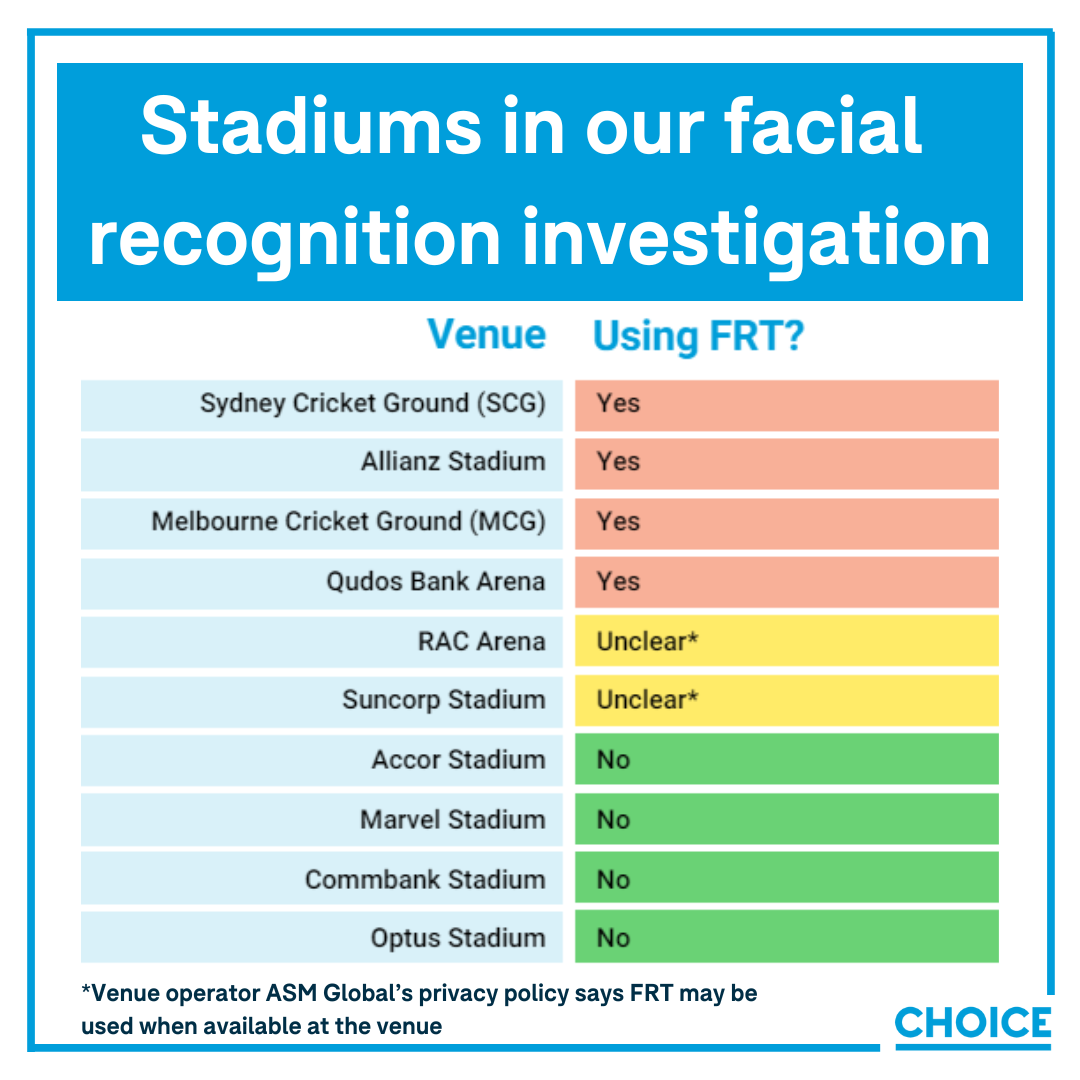
Many recent reports highlight how inaccurate facial recognition remains, as well as being race sensitive.
yet the sales people are polished and gullible officials seem to be frothing at their mouths to buy and implement it in the name of it being an end-all protection or tool for prosecution after the fact.
Where does it probably work? Matching a person to the digital image on the document they carry, eg drivers licenses, passports, and so on at check points, but not so much identifying anyone from a crowd.
As with retrospective laws, never assume government will not overstep the limits of what they enact, and then double and triple down defending the indefensible.
Some interesting, good points made by yourself. This thread reminded me of quite a head scratching encounter I recently encountered with the new " 1-Stop " Government agency when renewing my licence to drive. I previously was in possession of a ten year licence which was in need of renewal. Due to the age I am now, I had to shuffle down to renew the licence personally; for the compulsory eyesight appraisal; before being allowed to renew the licence for a period of five years. The photograph on the original licence was a decade old ( sporting quite a long beard, and much more hair atop my head ). I enquired if I would be having a new photograph for the new licence. The response was " are you happy if we use the old photograph ? ". " Aye all good ", I responded. The situation did make me wonder upon the voracity of the option offered; in light of the accuracy of the new licence in light of the topic theme. Cheers for reading, peaceful road, Peter.
This reminds me of the local coffee cafe which I suspect has facial recognition. I had seen the cameras on the ceiling but never took too much notice. I did, when the cafe first opened, joined their rewards scheme for my free coffees and never thought any more about it, until after not visiting the cafe for about 6 months the wife and I ordered coffees. The person behind the counter then looked at his register screen and welcomed me by my first name then swiped our rewards card through the register. Maybe just a good memory for faces?
In Queensland, the police can pull up one’s licence mugshot on their tablet computers…had this experience recently where another driver bumped lightly into our car in front of a policeman on point duty (no damage just a minor scratch which could be polished out). The police checked car owner, then pulled up photo to see if it corresponded with that on the licence. I though a physical licence was a robust ID, but the policeman said they often do it as a matter of identity checks.
In the NT, they do that at the entrance to every shop selling alcohol - just before the cashier does the same thing by scanning it to validate its authenticity (less of a ‘search function’ of course).
I’d like to think the national database is a ‘new thing’, but I suspect the only ‘new thing’ is the admission they are doing it ‘starting now (ahem/cough-10 years ago-cough)’ …
Facial recognition is not exactly new, and it’s not all there is either - but the capacity to process quickly and store long term is galloping forward at a cracking pace and is ‘interesting’ to say the least. Good recognition protocol does much more than the face - body shape, height, type, hair, clothing type/colour - voice profiling if the environment permits, even walk/run/unusual gait (ministry of?) - vehicle type, plates, etc - stitching all that together becomes an interesting web. In the NT there are static and mobile police cameras (on trailers) that collect video and audio and have remote control to ‘speak back’ to a ‘situation’ if need be … and drones …
I would be surprised if it is. If anyone has a passport, such photos are kept and shared with foreign governments to check identity authenticity then one travels internationally.
As the passport can easily be linked to anything else the Commonwealth has on an individual, I would be surprised if there has not been a national database for many years.
What is also worth noting that biometric data used for facial recognition can easily be obtained from a good quality front on photo (like a passport photo or those happy shots that many often post to social media). If anyone is concerned about the sensationalist media making news about a government using facial recognition technologies, I hope that the same individuals don’t upload any photos to the net otherwise the horse has already bolted.
A number of photo or image software packages offered with devices such as cameras (EG Sony) offered to auto ID and tag your friends. Other software offers to sync your data across devices. Some contacts managers enable images to be attached to contacts. Microsoft made it a key feature of at least one of it’s products. Have a Microsoft account and use Skype?
Perhaps it is much more than a horse that has bolted. Camel, Donkey, Goat, …
 ). I enquired if I would be having a new photograph for the new licence. The response was " are you happy if we use the old photograph ? ". " Aye all good ", I responded. The situation did make me wonder upon the voracity of the option offered; in light of the accuracy of the new licence in light of the topic theme. Cheers for reading, peaceful road, Peter.