I automatically clip my seat belt on in the car, I can see the good reasons for it and it’s not a problem, wouldn’t need an ‘adjuster’. But like some of the others, I have got a seat belt protector for the section that crosses my mid shoulder, because if wearing a summer top the webbing rubs uncomfortably against bare skin.
Obviously, no matter what they say, the seat belt is better suited for flat chested men. How does the advice to wear a seat belt ‘flat and firm’ work on curves? 
7 Likes
That’s very kind of you - thank you. I have something like the one you linked to but it is a bit too firm a fit around the belt which stops the belt retracting. I’ll get out the sewing machine and extend it a bit.
Thanks again!
you are welcome - my ‘toy’ is nice and loose, easy to slip up and down.
Australasain NCAP has been using the same protocols and dummies as Euro NCAP for many years. ANCAP conducted a research crash test with a small adult female dummy as a driver and found that protection from serious injury was good. This confirmed that most vehicle manufacturers design and conduct tests for a range of occupant sizes - not just regulation or NCAP requirements.
A sheepskin seat belt pad might make a high seat belt sash more comfortable and shouldn’t interfere with seat belt performance in a crash (but I am not aware of any crash tests to confirm this).
3 Likes
The discussion transcends safety and nobody disputes that has been working.
However personal comfort of other than adult males seems an unquantified aspect that has been in the ‘too hard’ or ‘don’t really care’ basket, as it seems to some.
Pads, cushions, legal or not, and so on are effectively transferring a treatment from the manufacturers and regulators onto each ‘non-conforming person’ to resolve on their own, whether more or less successfully.
As for the safety aspect, a belt that sits across a persons neck rather than mid-chest might do substantial damage to suggest there are some points to be made.
3 Likes
I am certainly not suggesting that a seat belt that applies load to the neck is okay. The sash belt must pass across the centre of the chest (sternum). Human rib cages do a remarkable job at distributing and absorbing crash forces.
In my experience the main issue with a driver who is too short for a sash seat belt is that the edge of the seat belt rubs against the neck but the sash belt still passes across the centre of the chest. A soft pad can alleviate this.
Way back in 2009 my colleagues and I recommended that shoulder height lines be added to car rear seat backs to help determine whether a young person needed a booster seat:
Although the regulators did not follow through the Australian Standard for child restraints picked up the idea and now all Australian child restraints have shoulder height lines.
Of course this concept does not assist a driver who is too short for the car’s seat belt system. Good luck trying to get (international) regulators to address this.
1 Like
Thanks for this NCAP report.
The Biomechanics report I referenced clearly indicates further damage to the thorax is indicated when the seat belt is not resting on the stronger shoulder bones.
I believe injuries are not being tracked / collated for this issue of seat belts that have limited adjustment.
My initial question was to find a solution that I could use and transfer to other vehicles and I have yet to ascertain whether using any sort of covering on the seatbelt, to alleviate the rubbing, is going to be legal.
Although not directly related to your issue, the MACA organisation has resources about safe transport in vehicles. You might be able to seek advice on your issue from their experts:
1 Like
No intention to refute anything. Just interested to know why an average sized person would have such a problem. The answer was it not just about height. And there are pads that can address the issue with the sash.
The adjustment topic is interesting. I have a 2010 Renault Koleos and after deciding to tackle this problem I have since discovered that I can make further adjustments to alleviate a lot of the issue.
Based on this you tube tutorial How To Adjust Your Driver’s Seat For Maximum Safety & Comfort - Safe Driving Tips (https://www.youtube.com/watch?v=0DCyuMvQwgI)
My car seat was not set at an optimum height so I raised it.
Bonus my head rest was now in a better position for safety
I then had to adjust the steering wheel to get a clear view of the road and instruments.
My seat back is in the upright position.
I adjusted the seat distance to ensure I could press the pedals and maintain a slight leg bend.
Checking that the distance of the air bag to my torso was around 10" rather than optimal 12" (I blame my short arms). I was unable to rest the wrist comfortably over the steering wheel.
Result the seat belt was further away from my neck not shoulder midpoint but no longer digging in to my neck.
I am curious whether you have a female partner, and if so whether she is happy with the status quo, or is just accepting of the way it is. Over many vehicles mine is neither happy nor accepting, but (rightly) feels powerless to change any of it; yes she has seatbelt pads - a number of them of differing types trying to find one that is comfortable and works for her. That has been a work in progress for her since almost forever.
Honest question, have you gotten ‘mouse wrist’ over long drives or don’t you take long drives? The point is you improved your seatbelt issue while potentially sacrificing your wrist.
It seems that kind of tradeoff is broadly accepted, but does it have to be or should it have to be?
Promise of future design -
This clip is discussing adjustments to the car and has features such as;
telescoping steering wheel column and
power adjustable pedals
I have not seen these features here in Australia but they may be available on high end cars.
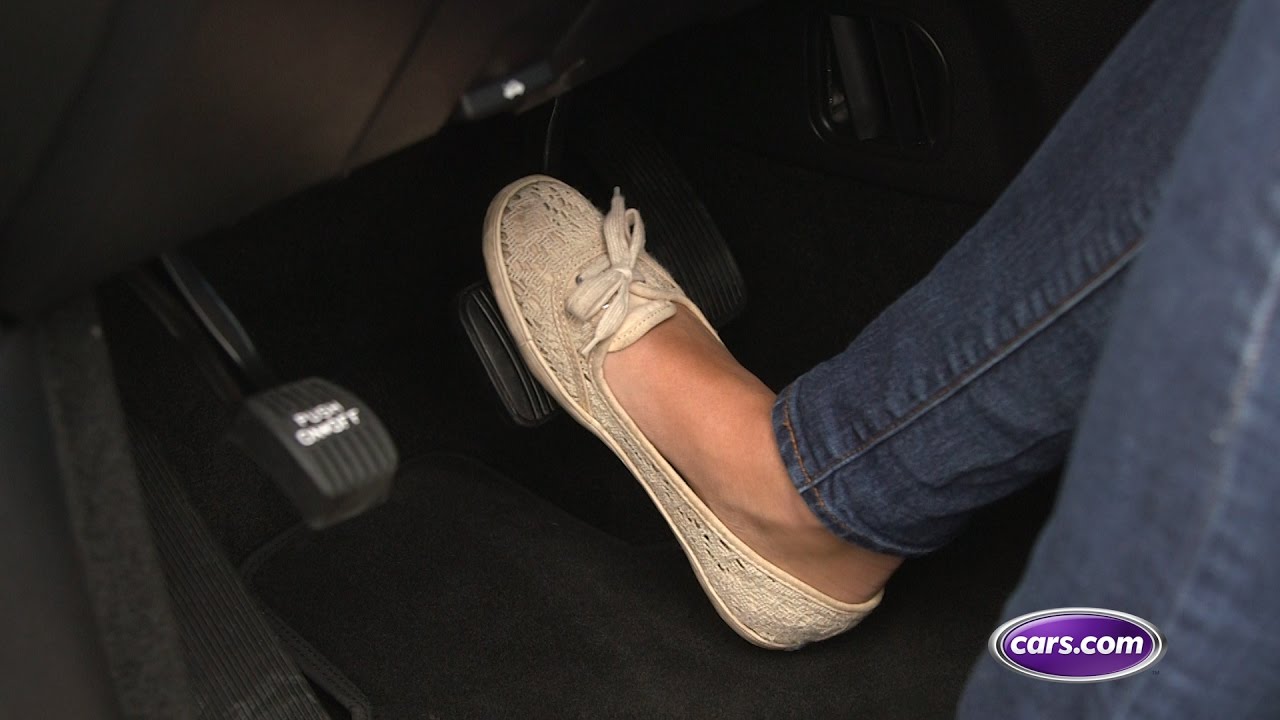
Possibly just accepting that seatbelts have to be worn. That’s the law.
I haven’t encountered female relatives, friends, passengers, and yes, a partner, who had seatbelt problems to the point of unwearability.
So that is my experience. Others may well be different. I acknowlege that.
Many newer cars have adjustable and telescoping steering wheels although getting both sometimes only comes in upper trim levels.
Adjustable pedals are rare and seem limited to larger SUVs and truck cabs, possibly because of costs and the competitive nature of pricing. While not convenient for multiple drivers there are apparently some pedal extensions that are legal here IF they are installed and comply with related regulations; eg you won’t find them at Repco, Supercheap, Autobarn, etc. however replacement pads of various thicknesses are available and may be ‘enough’.
Some US cars had power adjustable pedals as options but they fell by the way from lack of demand. This US site lists them.
2 Likes
This statement was in relation to the video suggesting a person could test the position of the steering wheel when seated correctly - not a reflection of any position I use when driving.
(what is mouse wrist)?
It is a trade off; juggling safety from potential air bag if too close and more pressure on my legs after raising the seat to position the seat belt away from my neck. Honestly what I had first perceived as a nuisance, when researched, unearthed a whole slew of potential injuries should an accident occur.
2 Likes
The term arose from repetitive mouse movements for PCs causing wrist pain through to carpal tunnel syndrome. In general some use the term for wrist pain from repetitive motions and when the wrist is not adequately supported during movements such as when using a mouse.
It can take quite a while to settle down. There are many variations on a ‘mouse’, eg ‘ergonomic mice’. A few for reference, not a recommendation for the products or company.
3 Likes
It is rather strange you made this comment Greg and don’t just take the original poster’s word for it that the seat belt is uncomfortable and cuts across her neck. It’s not only strange, it is undermining the problem.
1 Like
Why is it ‘strange’ to simply inquire why someone of average height has a seatbelt issue?
Subsequent posts in this topic have added more information on this issue, and very informative.
And solutions have been proffered.
Thanks for the clarification cute term for a painful injury. No I don’t have this I have wrist support on my mouse mat so this probably helps.
1 Like
There is no specific legislation in Qld that relates to drivers not being able to use cushions that I can find. To use one, the answer I have received is that the driver must ensure that the cushion does not interfere with the car’s safety systems or the ability to drive the car safely.
Perhaps it is similar in impact to putting a car seat cover on a car seat, if the car seat cover interferes with air bag deployment it would be illegal, however if it did not interfere it would be legal. Same if it interferes with any other car safety feature it would be illegal, if not it would be legal. Booster seats are legislated for children’s use only and they would not be driving a car, an adult sitting in one would be outside the legal protection of the legislation unless they had authority to do so.
If very short such as impacted by dwarfism, and the usual car for the driver then seat modification would be the best choice, however this may also impact the use for a person of “normal” stature. This type of permanent or semi-permanent modification needs to be checked and certified, and may require inspection by the Transport department and an new certification of compliance given.
2 Likes
