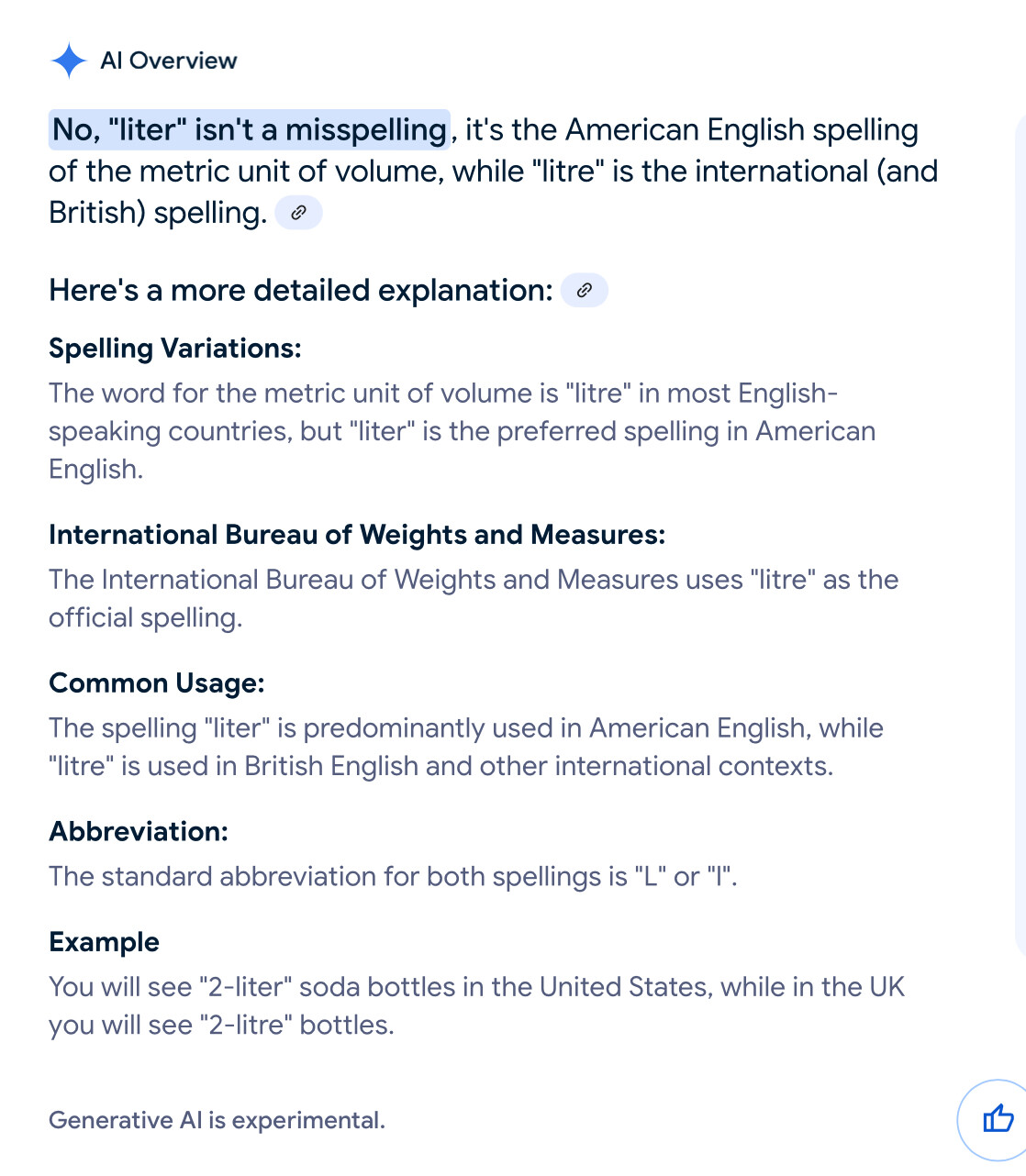
Looks like AI is a bit touchy on that subject 
1 Like
I wish it were not so. While I am part of the resistance it seems increasingly that

1 Like
Huxley v Wells or should one ask AI what it foretells?
“A Brave New World”, “The Shape of Things to Come”, “ tba “.
If AI is the dominant source of content/information - how does one reason other than as predetermined by what AI provides?
I’ve noted some divergence in the definitions of “Artificial Intelligence”. One human interpretation others might like to compare with other sources.
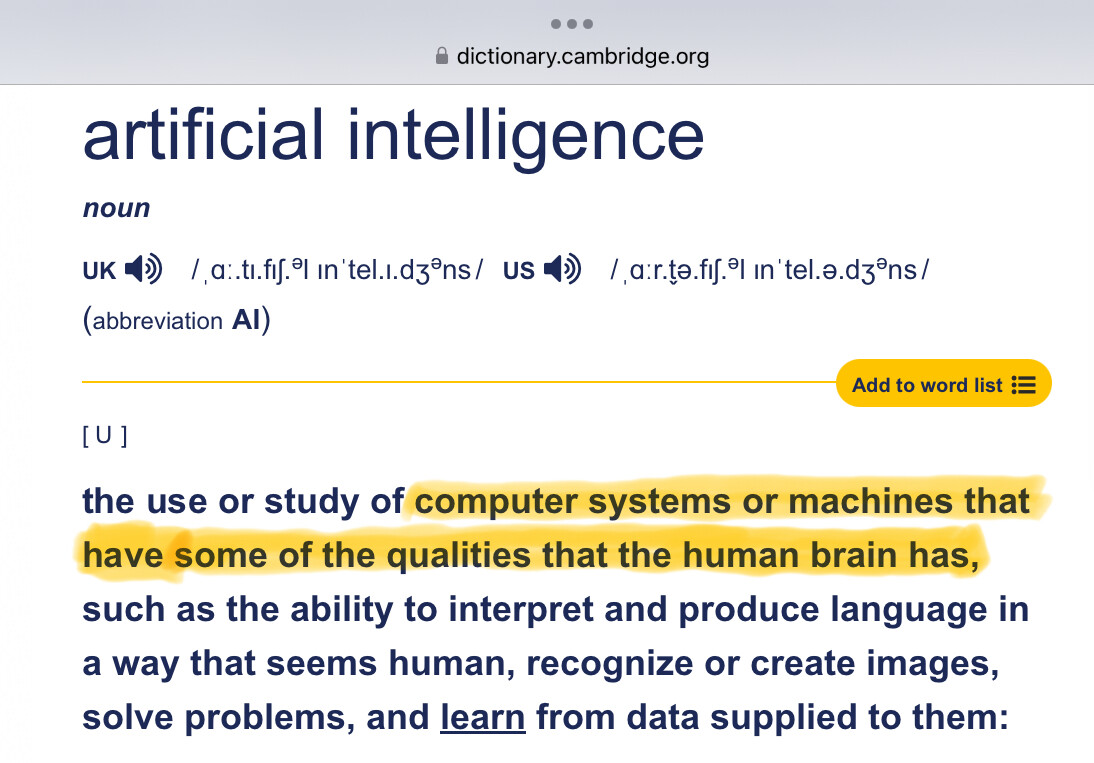
My highlighting that AI may only have “some of the qualities of the human brain”. The alternative if AI has “all of”, what value are we?

A serious downside of using browser AI agents: in security terms, they’ve become even weaker links in the security chain than end users typically are.
What are browser AI agents, I hear you ask?
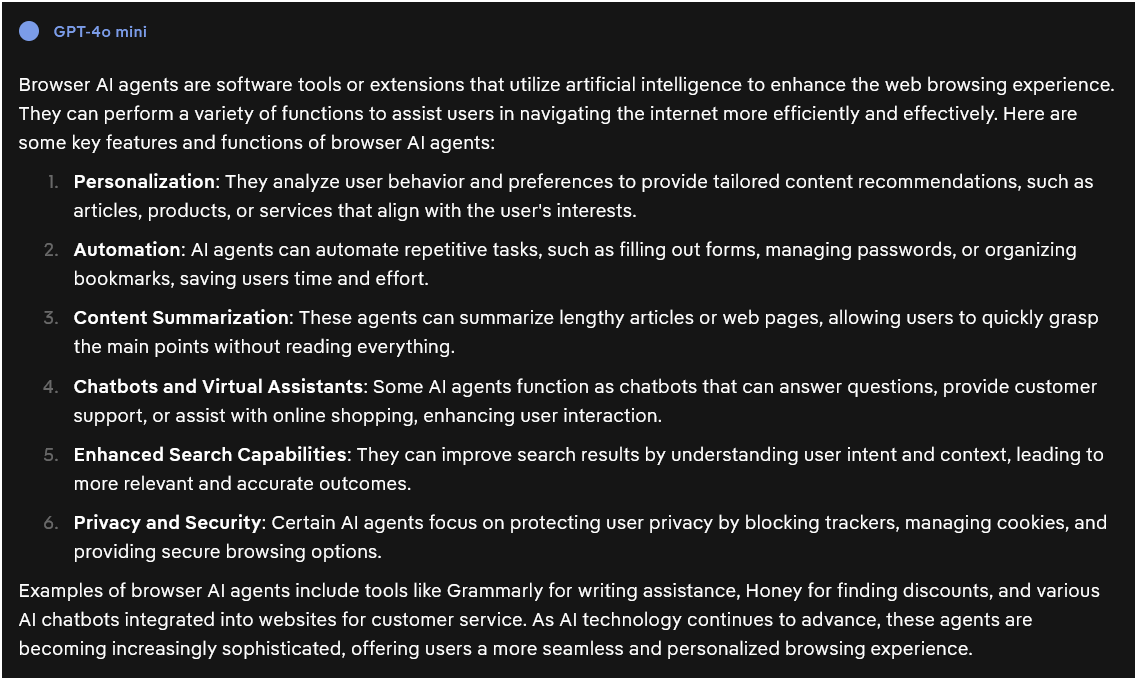
… and the Duckduckgo AI I used to give me the above summary is itself an example of a browser AI agent (“Content summarization”)!
This article is from the point of view of large organisations using browser AI agents:
A new weakest link emerges in enterprise cybersecurity
“The arrival of Browser AI Agents have dethroned employees as the weakest link within organizations,” said Vivek Ramachandran, CEO of SquareX.
These agents are capable of mimicking user behavior to perform tasks such as booking flights, scheduling meetings, or replying to emails - however, their fundamental weakness lies in their complete lack of security intuition.
Their responses are entirely task-driven and devoid of the critical thinking needed to assess risk.
I’d say using browser AI agents without applying (and knowing how to apply) ‘guardrails’ to what the agent’s allowed to do on your behalf is risky – and not just for employees of large organisations that have been adopting browser AI agents to improve productivity.
1 Like
This is just the latest of what’s becoming a common problem: AI systems are now used in association with all kinds of data, but seemingly haven’t been configured to be aware of and honour any access restrictions.
In this latest example, the URLs created by the AI for private sharing of chat transcripts were publicly accessible, so could be found and indexed via search engines like Google, and then found and viewed by anyone.
The incident, stemming from the platform’s “share” feature, has made sensitive user data freely accessible online, seemingly without the knowledge or explicit consent of the users involved.
The exposure was discovered when it became clear that using Grok’s share button did more than just generate a link for a specific recipient. It created a publicly accessible and indexable URL for the conversation transcript.
Consequently, search engines like Google crawled and indexed this content, making private chats searchable by anyone. A Google search on Thursday confirmed the scale of the issue, revealing nearly 300,000 indexed Grok conversations, with some reports from tech publications placing the number even higher, at over 370,000.
2 Likes
And AI browsers aren’t yet security-aware.
SquareX concluded that as AI capabilities become a standard part of web browsing, building security directly into these systems will be essential to prevent unintentional exposure of sensitive data.
In my opinion, autonomous AIs that aren’t highly security-aware join human end users as the “weakest link” in the security chain. Like humans, they can be tricked into unsafe behaviours by trusting when they should not.
1 Like
